Siri AI, iOS 27, and the End of an Era: Everything Announced at Apple's WWDC 2026
Apple's WWDC 2026 delivered an AI-centric keynote featuring a Siri overhaul collaborating with Google Gemini, the release of iOS 27 and macOS 27 Golden Gate, and a historic leadership transition as Tim Cook prepares to step down.
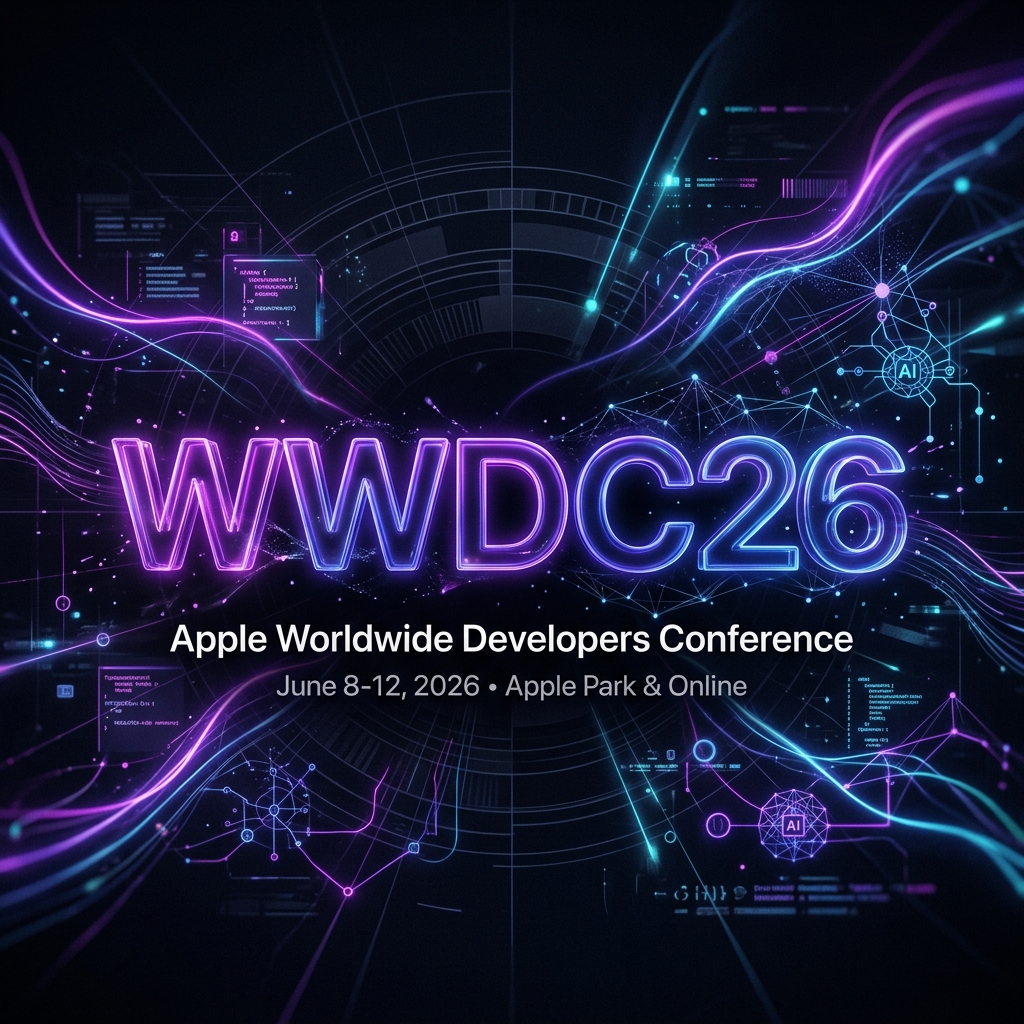
The Worldwide Developers Conference (WWDC) is always a major milestone in Apple’s calendar, but the WWDC 2026 keynote on June 8, 2026, will go down as one of the most historic. Apple delivered a packed showcase that was equal parts technological revolution and emotional farewell.
Not only did Apple fundamentally rewrite its AI strategy by collaborating with Google to power a completely rebuilt Siri AI with Gemini models in the cloud, but the company also announced a transition that marks the end of an era: Tim Cook's final WWDC keynote before he steps down as CEO on September 1, 2026.
With massive updates spanning iOS 27, macOS 27 "Golden Gate", and the rest of Apple's ecosystem, there is a lot to unpack. Here is the comprehensive breakdown of everything announced at WWDC 2026.
1. Siri AI: A New Hybrid Architecture
The centrepiece of the entire keynote was Siri AI, a complete ground-up redesign of Apple’s voice assistant. After years of incremental updates, Apple has embraced generative AI to make Siri a true system-wide conversational partner.
The Gemini Partnership & Architecture
Rather than processing everything in the cloud or relying on a single model, Siri AI uses a new hybrid architecture that splits workloads based on complexity and privacy needs:
- On-Device & Private Cloud Compute: Apple's own proprietary foundation models handle on-device processing for tasks involving local data, ensuring maximum privacy and minimal latency. When tasks exceed on-device capabilities, they are processed securely using Apple's Private Cloud Compute.
- Google Gemini Integration: For queries requiring complex cloud-based reasoning, creative generation, or broad world knowledge, Siri collaborates directly with Google's Gemini models in the cloud.
- Financial Scope: To secure this partnership, Apple has reportedly signed a multi-year licensing arrangement with Google valued at approximately $1 billion annually for a custom Gemini model.
- Antitrust Scrutiny: This new AI partnership, layered directly on top of Apple's existing search default agreement with Google (estimated to be worth ~$20 billion annually), is already expected to draw heavy antitrust scrutiny from regulators in both the US and the European Union.
A New Visual Design & Standalone App
- Elegant Cards & Panels: Instead of wrapping around the Dynamic Island, the new Siri AI appears through elegant floating cards and contextual panels that dynamically blend into iOS 27, offering a much more fluid and integrated look.
- The Standalone Siri AI App: For the first time, Siri has a standalone app interface on macOS 27 and iOS 27. Similar to modern chatbot interfaces, this app lets you type or speak to Siri, review past conversation history, and manage complex multi-step prompt workflows.
- Spotlight Integration: The Spotlight search bar has been merged with Siri AI, allowing you to ask natural language questions directly from your keyboard.
2. Unifying the Ecosystem: Version 27 & "Liquid Glass"
Apple has officially completed the transition to its new year-aligned versioning system to eliminate the confusing mesh of different version numbers across iOS, macOS, watchOS, and tvOS. Following the shift in 2025 (which jumped straight to version 26), the entire ecosystem is now unified under version 27 (reflecting the 2027 release window). The updates announced include iOS 27, macOS 27 "Golden Gate", iPadOS 27, watchOS 27, visionOS 27, and tvOS 27.
Refining "Liquid Glass"
At WWDC 2026, Apple refined the translucent "Liquid Glass" design system that debuted in the previous OS release.
- Transparency Sliders: Responding to user feedback about legibility, Apple has added a new slider in System Settings. Users can now adjust the opacity of the Liquid Glass interface, choosing everything from a completely clear, glassmorphic look to fully opaque, solid toolbars.
- Enhanced Contrast: Toolbars, edge-to-edge sidebars, and system fonts have been tweaked to improve readability and deliver a more uniform, premium aesthetic.
Compatibility Drops & The End of Intel Support
This year's updates bring significant compatibility changes across both Mac and Apple Watch lines:
- macOS Golden Gate: In a major hardware milestone, macOS 27 "Golden Gate" is the first macOS release to run exclusively on Apple Silicon (M-series) Macs. Apple has officially dropped support for all remaining Intel-based Mac computers, with the Mac Pro 2019 model specifically being dropped from compatibility. While Intel-compiled applications will continue to run on Apple Silicon via Rosetta 2, Intel hardware is officially end-of-life for macOS updates.
- watchOS 27 Compatibility: Apple has also dropped watchOS 27 support for several current-generation Apple Watches. Most notably, models like the first-generation Apple Watch Ultra and the Apple Watch SE 2 are excluded, while the newer Apple Watch SE 3 remains supported. This marks one of the steepest cuts in the platform's history, dropping roughly three years of device support in a single update (watchOS 26 supported the Series 6 and later). The Apple Watch Series 9 was even briefly listed as unsupported before Apple confirmed it would be supported after all.
3. Deep Apple Intelligence & Smart Home Upgrades
Apple Intelligence is receiving major system-wide updates to make daily tasks faster and more automated.
- Spatial Reframing: Using advanced on-device AI, the Photos app can now perform "spatial reframing," automatically expanding the borders of photos and adjusting lighting to create more balanced, professional-looking compositions.
- Image Playground 2.0: The AI image generator is receiving better style controls, faster rendering, and deeper integration into Notes and Freeform.
- Apple Home Secure Video: Linking Apple Intelligence directly with home security cameras, the Home app can now analyse security footage to generate highly detailed video descriptions and summaries of clips, going far beyond generic movement notifications.
- App-Specific AI:
- Safari: Gains AI-driven thematic tab organisation and customised web extension recommendations based on your browsing behaviour.
- Messages & Mail: Offer one-tap task suggestions, automated drafts, and high-quality context-aware responses.
- Shortcuts: You can now create complex Shortcuts workflows simply by describing what you want to achieve in natural language.
4. Tim Cook's Farewell and the John Ternus Era
In an emotional climax to the keynote, Tim Cook announced that WWDC 2026 would be his final developer conference as Apple’s CEO.
After 15 years leading the tech giant, Cook will step down on September 1, 2026, to transition into the role of Executive Chairman. Addressing the developer community, Cook called his time as CEO the "honor of a lifetime" and expressed deep gratitude for the global developer ecosystem.
The Next CEO: John Ternus
Apple confirmed that John Ternus, currently the Senior Vice President of Hardware Engineering, will succeed Tim Cook as Apple’s CEO on September 1, 2026. While Ternus was present in Cupertino, he did not take the stage during the keynote, keeping the focus entirely on Cook's final address and the engineering teams showing off the new software.
5. Security, Child Safety, and Availability
Apple expanded its family safety suite with a dedicated Child and Teen Safety Hub in iOS 27 and macOS 27.
The hub introduces mandatory child accounts for children under the age of 13. These accounts feature strict parental oversight, content filters, and communication safety guards. Parents can control who their child contacts via Phone, FaceTime and Messages, determine which apps and websites are accessible, and children can request permission to access certain websites in Safari. These features can remain active until the user turns 18, giving parents a much more robust set of tools to manage digital safety.
Availability & Compatibility
- Developer Betas: The first developer betas for all version 27 operating systems were released immediately following the keynote on June 8, 2026.
- Public Betas: Expected to roll out in July 2026.
- General Release: Scheduled for autumn 2026.
Note on hardware requirements: Many of the advanced Siri AI and Apple Intelligence features will require Apple's latest hardware. On Macs, the most advanced Siri features require at least an M3 chip and 12GB of RAM, while iPads and newer Macs will require M4/M5 chips. On mobile, the core Siri AI and Apple Intelligence features require an iPhone 15 Pro, iPhone 15 Pro Max, or any iPhone 16 model or later. A handful of premium capabilities, such as the new expressive Siri voices, are reserved for the iPhone 17 Pro and newer. Furthermore, due to regulatory hurdles, some features will face delayed rollouts in regions like the European Union and China.
Final Thoughts: A Historic Shift
WWDC 2026 represents a massive turning point for Apple. By integrating Google Gemini to supercharge Siri's cloud capabilities while relying on its own models for on-device processing, Apple has designed a balanced approach to the generative AI era. Coupled with the final end of Intel Mac compatibility, watchOS drops, and a historic leadership transition, Apple is entering its next chapter with a unified ecosystem and a fresh vision.
What are your thoughts on Siri AI's Gemini integration? Are you sad to see Tim Cook step down? Let us know your thoughts in the comments below!
More from the desk
AMD to Acquire AI Inference Silicon Startup Taalas
AMD agrees to acquire Toronto startup Taalas to embed hardwired AI models directly onto silicon, tackling energy and latency bottlenecks in inference workloads.
Nobody Is Always Cheapest: What 33,000 Grocery Prices Taught Us About India's Grocery App Price War
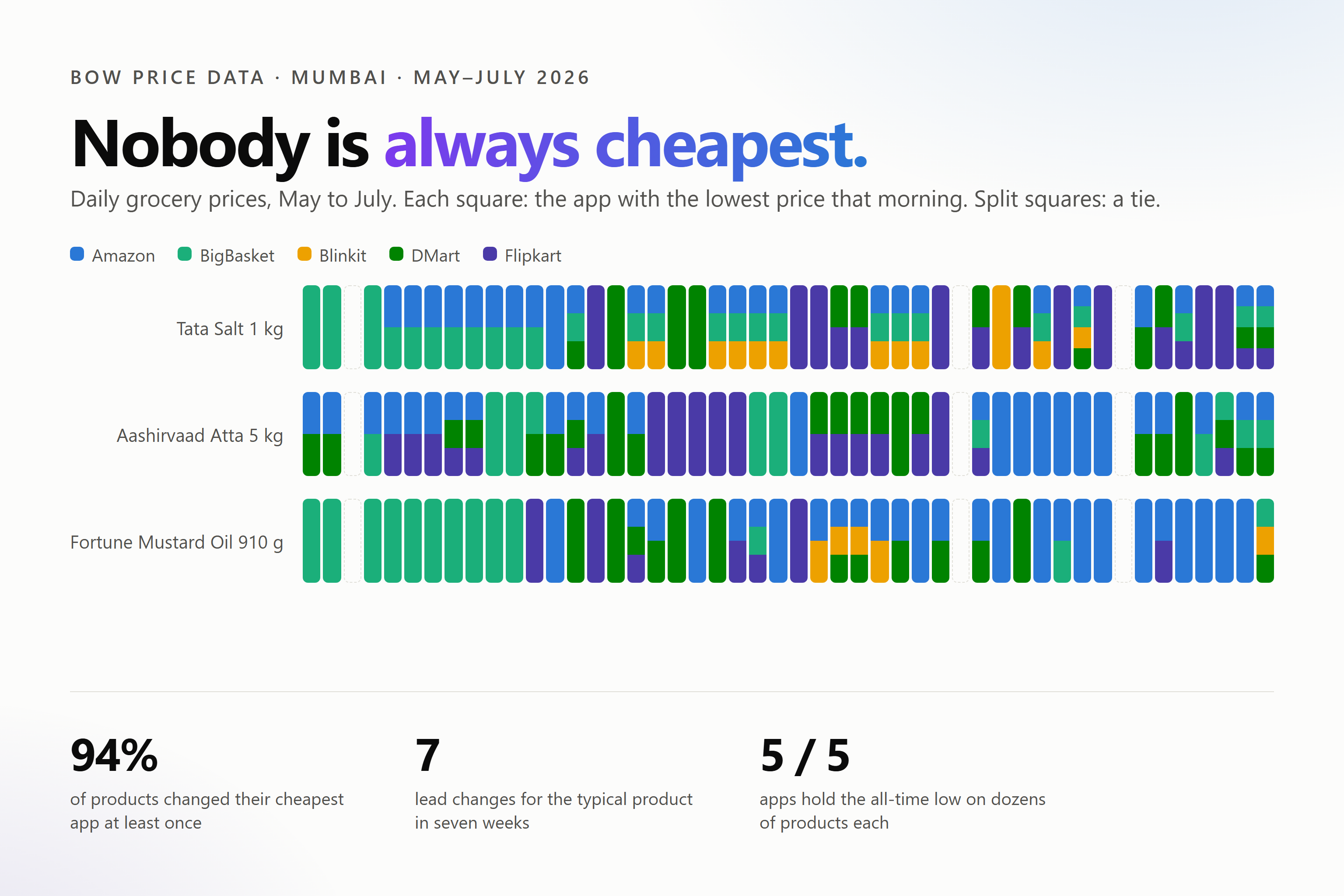
Seven weeks of daily price data from BOW, across DMart, BigBasket, Blinkit, Amazon and Flipkart in Mumbai. The verdict: 94% of products changed their cheapest app at least once, every platform holds all-time lows, and the real money is in timing, not loyalty.
The Agentic Shift: Unveiling Gemini Spark and the Future of Android XR at Google I/O 2026
Google I/O 2026 delivered a historic keynote centered entirely on autonomous agents. Here is the comprehensive breakdown of Gemini 3.5, the offline personal AI agent Gemini Spark, stylish Android XR glasses, and the Antigravity 2.0 visual workspace.