The Agentic Shift: Unveiling Gemini Spark and the Future of Android XR at Google I/O 2026
Google I/O 2026 delivered a historic keynote centered entirely on autonomous agents. Here is the comprehensive breakdown of Gemini 3.5, the offline personal AI agent Gemini Spark, stylish Android XR glasses, and the Antigravity 2.0 visual workspace.
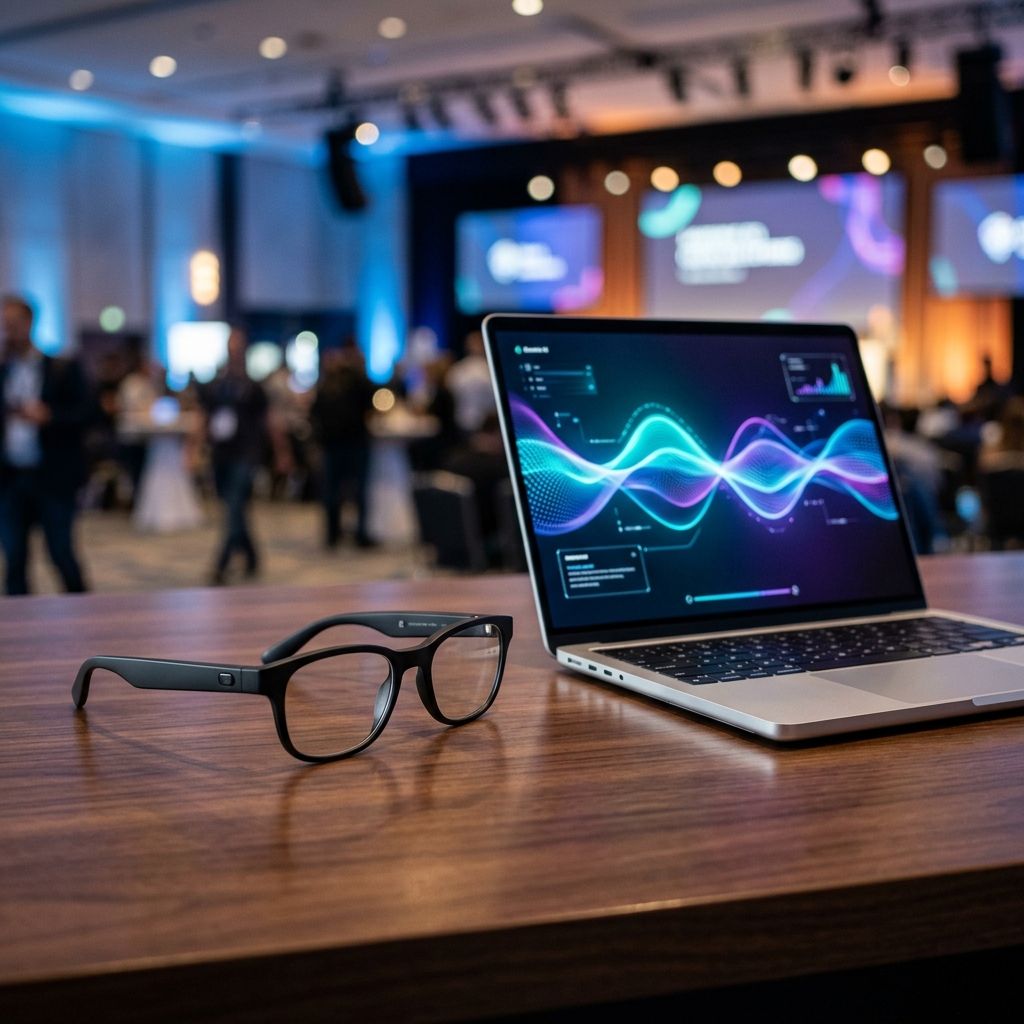
The Shoreline Amphitheatre in Mountain View just bore witness to what might be the most consequential Google I/O keynote in a decade. If previous years were about showing what AI could understand, Google I/O 2026 was about what AI can do.
The overarching theme of the event was "Agentic AI"—a shift from static chatbots to autonomous, proactive software agents that can act, plan, and execute workflows on your behalf.
From massive upgrades to the Gemini model family to screen-free XR smart glasses and the developer-focused Antigravity 2.0 platform, Google is fundamentally restructuring its ecosystem around agency. Here is a breakdown of the monumental announcements from the keynote.
1. Gemini 3.5 Series, Omni Flash & Gemini Spark: The Autonomous Leap
At the core of the keynote was the next evolution of Google’s foundational intelligence: the Gemini 3.5 family, coupled with highly specialized visual world models.
- Gemini 3.5 Flash: Available immediately, 3.5 Flash is now the new default model powering the consumer Gemini app and AI features in Search. Optimized for raw speed and low latency, it handles highly complex tasks in milliseconds.
- Gemini 3.5 Pro: Scheduled to roll out in June, this flagship model boasts deep analytical capabilities designed to tackle highly sophisticated reasoning tasks.
- Gemini Omni Flash: The surprise model of the keynote. While Google's ultimate vision is a general multimodal model capable of generating anything from any input, Gemini Omni Flash is a highly specialized, video-based generation and editing world model. It allows users to prompt with video, text, and audio to output seamlessly editable video. It outputs directly into Google's creative apps: the Google Flow app (launching in beta on Android for ages 18+) and Flow Music (launching in beta on iOS), which are receiving deep integrations with the Omni Flash model. While a flagship Gemini Omni Pro version is planned for the future, Google has not yet confirmed an official release window. The model is rolling out immediately to Google AI Plus, Pro, and Ultra subscribers.
The Headliner: Gemini Spark (A 24/7 Cloud Agent)
The standout consumer reveal was Gemini Spark, a 24/7 personal AI agent designed to independently manage complex digital lives. Unlike traditional assistants that wait for simple commands, Spark works in the background.
The headline technical breakthrough is that Spark is a fully cloud-based AI agent running on Google Cloud. This means it works even when you are completely offline: you can delegate long-term, multi-step tasks to it, close your laptop, or turn off your phone, and Spark will continue running its background workflows 24/7. It will only ping you when a key decision or approval is required. The Gemini Spark beta will be rolling out to limited testers this week and as a beta version exclusively to U.S. Google AI Ultra subscribers ($100/month) next week.
To support this autonomous agent in real-world transactions, Google highlighted new updates to its Agent Payments Protocol (AP2)—which originally debuted in September 2025. Designed to keep autonomous agents from going rogue with your wallet, AP2 allows users to set strict, hard financial limits, approved merchants, and maximum transaction caps on what Spark can independently purchase before requiring a manual human tap to confirm.
2. Reimagining Search, YouTube, and Shopping
Google’s core consumer products are receiving their most radical visual and functional overhauls in over a quarter-century.
The Intelligent Search Box & SynthID
Google Search is moving far beyond the simple text query. The new Intelligent Search Box allows you to input text, upload files, drop in high-res images, and record live video simultaneously inside a single search query. The system synthesizes all formats concurrently to provide a direct, visual step-by-step solution.
To address the rise of synthetic media, Google announced that its SynthID and C2PA watermarking/verification systems are being integrated directly into Google Search and Chrome to seamlessly flag AI-generated imagery and media as users browse the web.
Chrome "Auto Browse", Ask YouTube & Universal Cart
- Chrome "Auto Browse": Chrome is gaining built-in, on-device automation capabilities, allowing Gemini to proactively "auto browse" websites and structure web data for you in the background.
- Ask YouTube: This feature embeds a conversational layer directly into the video player, allowing users to ask natural language questions about the video they are currently watching and receive instant, timestamp-anchored answers.
- Universal Cart: An AI-powered shopping companion that acts as a cross-app deal tracker. Leveraging Google’s Universal Commerce Protocol (originally launched in January 2026), it monitors your shopping tabs, automatically coordinates coupons and discounts, and lets you purchase items across entirely different retailers with a single unified checkout process. Universal Cart is scheduled to roll out to Google Search and the Gemini app in the U.S. first this summer, with YouTube and Gmail integrations slated to follow later.
3. Android XR: Audio-First Smart Glasses
Google is taking another run at augmented reality in partnership with Samsung, but this time, it is leaving bulky, heavy headsets behind.
The upcoming Android XR Smart Glasses (slated for a release this Fall) are explicitly no-screen, audio-first glasses. Google completely skipped floating prisms or screen overlays for this first consumer batch to focus entirely on audio, voice, and spatial awareness. The discreet cameras and microphones are used solely so Gemini can perceive the world and interact with you—such as whispering real-time translations into your ear or reading street signs aloud.
Rather than a locked-down display headset, these glasses are designed to function as a lightweight smartphone companion. While native integration leans heavily into the Galaxy and Android ecosystems, Google confirmed the glasses will pair with both Android and iOS phones. They are fully controllable either via a sleek touchpad built into the temple arm or hands-free by saying "Hey Google."
To ensure people actually want to wear them, Google and Samsung have partnered with iconic eyewear brands like Warby Parker and Gentle Monster. The result is a selection of stylish, lightweight frames that look indistinguishable from premium sunglasses or prescription eyewear.
4. Antigravity 2.0 & Developer Innovations
For the developers building the next wave of software, Google’s announcements were nothing short of game-changing.
Standalone Visual Workspace
Antigravity 2.0 has officially evolved into a standalone desktop application coupled with an Antigravity CLI and SDK. Natively driven under the hood by the ultra-fast Gemini 3.5 Flash, this turns Antigravity 2.0 into a centralized visual workspace for managing, orchestrating, and parallelizing autonomous coding agents.
The Viral 12-Hour OS Demo
In a viral moment during the developer keynote, Google live-demoed the power of Antigravity 2.0 by deploying 93 AI sub-agents to build the core framework of a functional operating system from scratch in just 12 hours. Shockingly, the entire operating system was built from a single, high-level prompt for under $1,000 in total API costs. They even demonstrated the system generating missing keyboard drivers on the fly to successfully run and play the original Doom.
- Android Bench & Migration Agents: To ease the transition into native ecosystem development, Google launched automated Migration Agents. These intelligent systems can ingest legacy codebases written in cross-platform frameworks and automatically convert them into clean, optimized native Kotlin code, complete with modern performance benchmarking tools.
5. The Subscriptions & Enterprise Shakeup
To support this massive infrastructure of autonomous agents, Google is officially structuring access and security for both individual users and organizations:
- Consumer Access: Google is organizing these rollouts across its paid tiers: the video-focused Gemini Omni Flash is dropping for Google AI Plus, Pro, and Ultra subscribers, while the autonomous Gemini Spark beta remains strictly exclusive to the top-tier Google AI Ultra ($100/month) plan at launch.
- For Enterprise: Google highlighted the expansion of the Gemini Enterprise Agent Platform on Google Cloud. Originally introduced at Google Cloud Next '26, this suite is designed to help organizations easily deploy, coordinate, and monitor secure networks of sub-agents across their operations. To ensure strict enterprise security, every single task executes inside a completely isolated, ephemeral virtual machine (VM) sandbox, guaranteeing that sensitive company data never overlaps or leaks between sessions.
Final Thoughts: The Year of the Agent
Google I/O 2026 marks the moment AI transitioned from a novelty chatbot that answers questions to an active companion that solves problems. By pairing cloud-based agentic workflows like Gemini Spark with screen-free spatial wearables like the Samsung XR glasses and the visual parallel workspace of Antigravity 2.0, Google is laying the groundwork for a world where technology works for us, autonomously and seamlessly.
Which of the Google I/O 2026 announcements are you most excited to try? Will you be picking up the Samsung XR glasses this Fall? Let us know in the comments below!
More from the desk
AMD to Acquire AI Inference Silicon Startup Taalas
AMD agrees to acquire Toronto startup Taalas to embed hardwired AI models directly onto silicon, tackling energy and latency bottlenecks in inference workloads.
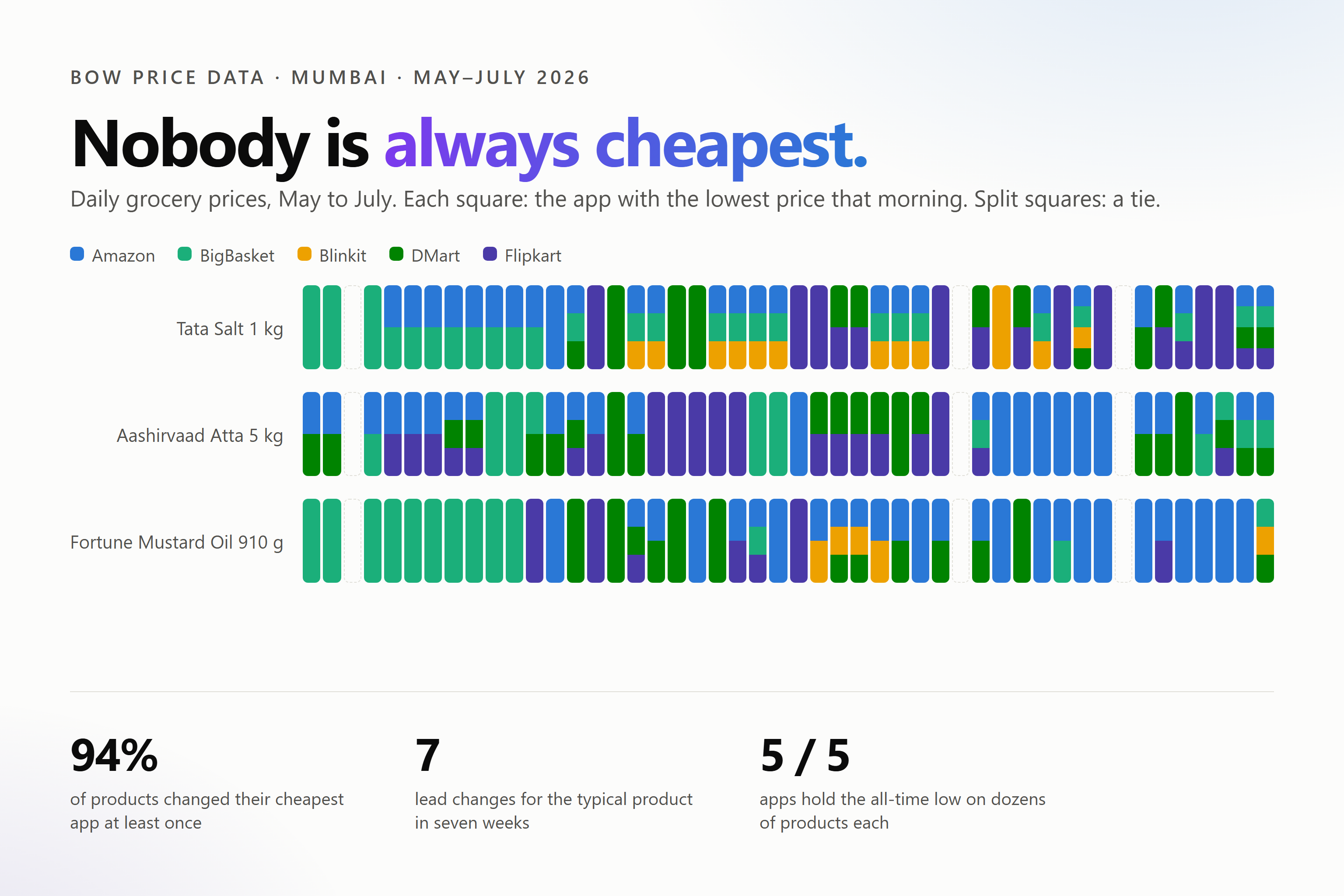
Nobody Is Always Cheapest: What 33,000 Grocery Prices Taught Us About India's Grocery App Price War
Seven weeks of daily price data from BOW, across DMart, BigBasket, Blinkit, Amazon and Flipkart in Mumbai. The verdict: 94% of products changed their cheapest app at least once, every platform holds all-time lows, and the real money is in timing, not loyalty.
Siri AI, iOS 27, and the End of an Era: Everything Announced at Apple's WWDC 2026
Apple's WWDC 2026 delivered an AI-centric keynote featuring a Siri overhaul collaborating with Google Gemini, the release of iOS 27 and macOS 27 Golden Gate, and a historic leadership transition as Tim Cook prepares to step down.