
Samsung Showcases Odyssey G8 6K Gaming Monitor at Gamescom 2026
Samsung headlines Gamescom 2026 with the Odyssey G8 (G80HS), showcasing the industry's first 6K gaming monitor alongside the PCIe 5.0 SSD 9100 PRO.
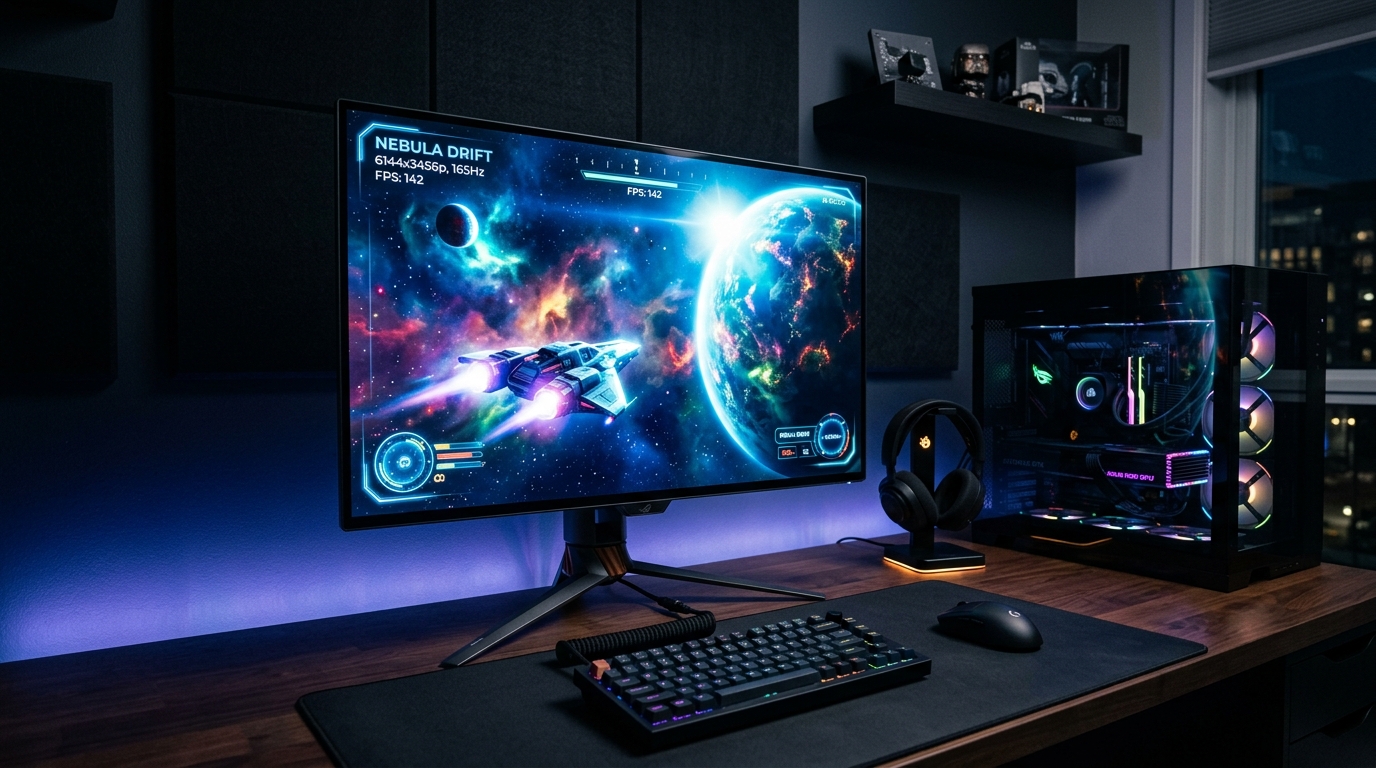
Samsung has detailed its presentation lineup for Gamescom 2026 in Cologne, Germany, operating under the #PlaySamsung banner. Running from August 26 through August 30 (with a press and trade preview day on August 26 and Opening Night Live on August 25), the showcase centers on high-performance PC hardware, mobile flagships, and esports competitions. The centerpiece of Samsung's PC display booth is the 32-inch Odyssey G8 (G80HS model), a display Samsung originally launched in May 2026 as the industry's first 6K gaming monitor.
Rather than announcing a new panel architecture on the show floor, Samsung is using Gamescom to feature the G80HS in hands-on gaming setups, alongside its flagship 9100 PRO NVMe SSD. The combination highlights how hardware manufacturers are addressing the dual demands of extreme pixel density and massive asset streaming bandwidth in modern PC titles.
1. Odyssey G8 (G80HS): 6K Pixel Density and Dual Mode Switching
The 32-inch Odyssey G8 (G80HS) features a native 6K resolution (6,144 × 3,456) running at 165Hz on a Fast IPS panel. Delivering 224 pixels per inch (PPI), the panel offers image clarity that eclipses standard 4K displays.
Because rendering at native 6K creates severe frame-rate bottlenecks in fast-paced titles, Samsung built a hardware-level Dual Mode function directly into the G80HS display controller. Users can switch between two native operating modes depending on game genre:
- Ultra-High Detail Mode: Native 6K resolution (6,144 × 3,456) at a 165Hz refresh rate for visual fidelity in single-player titles.
- High-Speed Esports Mode: 3K resolution (3,072 × 1,728) at up to a 330Hz refresh rate for low-latency competitive gaming.
Input Bandwidth and HDR Specifications
To handle the data rates required for uncompressed 6K video at 165Hz, the G80HS includes a DisplayPort 2.1 port operating at UHBR20 bandwidth. For secondary devices and console connectivity, the monitor provides two HDMI 2.1 ports and a USB-C port with up to 98W power delivery. The display is NVIDIA G-SYNC Compatible, supports AMD FreeSync Premium, and features HDR10+ Gaming support.
2. SSD 9100 PRO: PCIe 5.0 Throughput for Asset Streaming
High-resolution textures and complex geometry in 6K environments require high disk-to-VRAM transfer speeds to avoid stuttering and texture pop-in. For its Gamescom showcase, Samsung is highlighting its flagship PCIe 5.0 9100 PRO NVMe SSD alongside its high-resolution displays.
Built on a PCIe 5.0 x4 interface, the 9100 PRO delivers high sequential and random performance across demanding workloads:
- Sequential Transfer Speeds: Up to 14,800 MB/s sequential read and 13,400 MB/s sequential write speeds on 4TB and 8TB capacities (1TB and 2TB models are rated up to 14,700 MB/s read).
- Random Operations: Random read and write speeds reach up to 2,200K and 2,600K IOPS respectively.
- Thermal Design: Available as a standard M.2 2280 drive, Samsung also offers a dedicated "9100 PRO with Heatsink" SKU featuring an integrated aluminum heatsink to prevent thermal throttling under continuous heavy IO loads.
To highlight these hardware capabilities, Samsung's booth in Hall 09.1 will let attendees play Pearl Abyss's open-world action-adventure game Crimson Desert on Odyssey G8 setups.
3. Samsung's Cross-Platform Presence at Gamescom 2026
Alongside PC display and storage hardware, Samsung's Gamescom booth will cover cross-platform gaming across mobile, PC, and console ecosystems. The company is featuring its Galaxy Z Fold8 Ultra foldable flagship as a mobile gaming platform and hosting the world finals for the #PlayGalaxy Cup featuring PUBG Mobile.
While the Odyssey G8 (G80HS) and 9100 PRO SSD are existing retail products, their demonstration at Gamescom highlights how display density, refresh rate flexibility, and PCIe 5.0 storage bandwidth are coming together to support current graphics hardware.
Sources & References
- Samsung Newsroom: Samsung To Showcase Latest Gaming Innovations at Gamescom 2026 (Accessed on August 14, 2026)
- Samsung Newsroom: Samsung Launches Next-Gen Odyssey Gaming and ViewFinity Monitors, Including Industry's First 6K Gaming Monitor (Accessed on August 14, 2026)
- Samsung Newsroom: Samsung Announces 9100 PRO Series SSDs With Breakthrough PCIe 5.0 Performance (Accessed on August 14, 2026)
- Samsung Odyssey G8 Product Page: 32" Odyssey G8 (G80HS) Dual Mode 6K 165Hz / 3K 330Hz (Accessed on August 14, 2026)
- Basic Tutorials: Samsung at Gamescom 2026: Odyssey G8 6K monitor, Galaxy Z Fold8 Ultra and SSD 9100 PRO take center stage (Accessed on August 14, 2026)
- SamMobile: Samsung to showcase its range of gaming products at Gamescom 2026 (Accessed on August 14, 2026)
More from the desk
Galaxy Unpacked July 2026: Z Fold8 Ultra, Watch Ultra 2, and Intelligent Eyewear Unveiled
Samsung's July 2026 Unpacked event delivered a massive ecosystem expansion, introducing the Galaxy Z Fold8 Ultra, the Snapdragon-powered Watch Ultra 2, and Android XR intelligent eyewear.
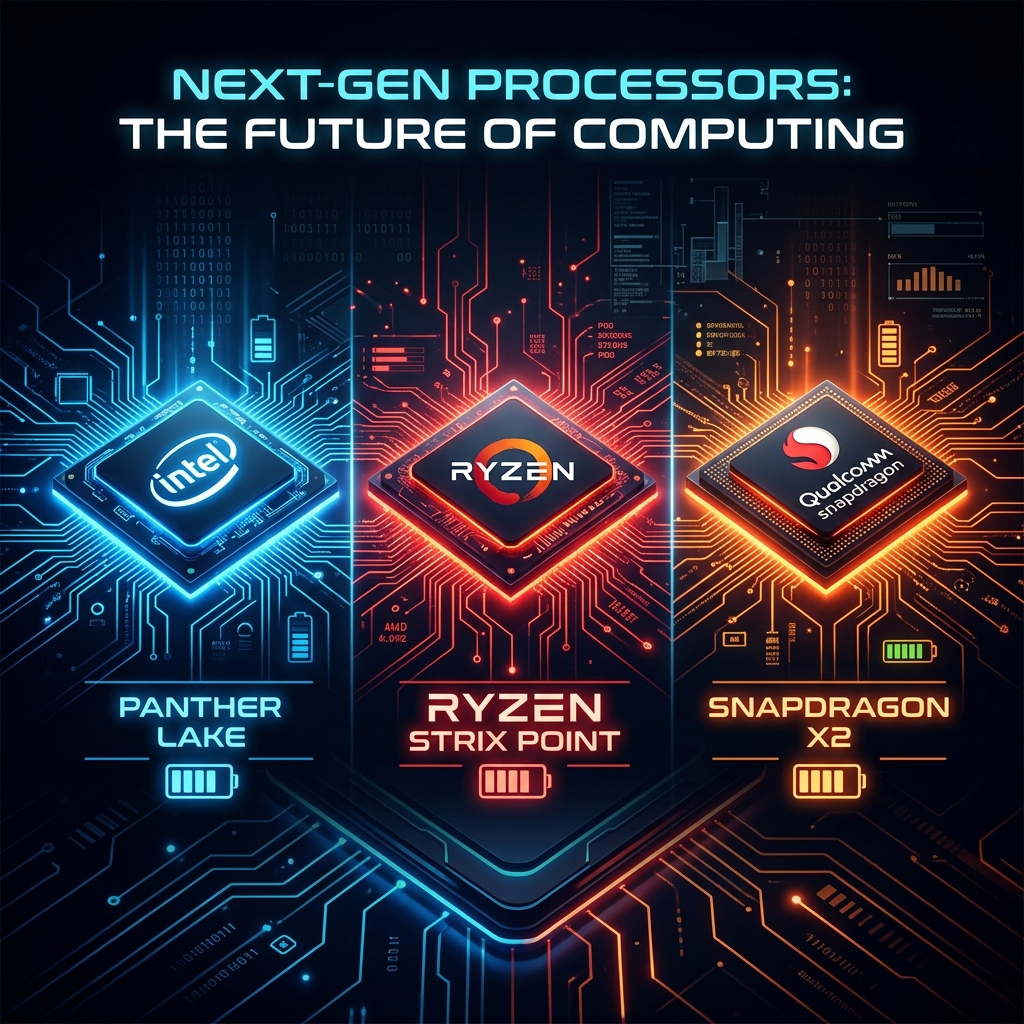
Intel Panther Lake vs. Ryzen Gorgon Point vs. Snapdragon X2: The 2026 Battery War
The old assumptions about ARM and x86 battery life are breaking down. Armed with real-world review data, we look at how Intel's Panther Lake has closed the gap, and why Qualcomm's sophomore Snapdragon X2 traded some of its efficiency crown for performance.

Two Years of Copilot+: You Were Sold Intelligence, You Bought Efficiency
NPUs are now standard plumbing in modern laptops. But the real value of the neural engine is not the "AI magic" Microsoft marketed: it is silence, efficiency, and battery life.