
Microsoft's Surface Laptop Ultra Brings Nvidia's RTX Spark to a $2,599 MacBook Pro Rival
Microsoft's new flagship Surface Laptop Ultra packs Nvidia's RTX Spark N1X superchip, up to 128GB of unified memory, and a 2,000-nit mini-LED display to take on Apple's 16-inch MacBook Pro.

For years, creative professionals, machine learning engineers, and technical developers faced an unyielding trade-off when selecting a high-end portable workstation. Choosing Apple Silicon meant enjoying quiet operation, all-day battery efficiency, and massive unified memory pools capable of loading local AI models without breaking a sweat, but it came at the cost of giving up the native Windows environment and full Nvidia CUDA ecosystem. Choosing a Windows x86 laptop with a discrete GPU delivered raw graphics grunt, yet it frequently demanded bulky chassis dimensions, deafening fan profiles under sustained loads, and battery life that evaporated away from a wall outlet.
Microsoft is attempting to shatter that binary compromise. At its October 7 event, the company officially opened pre-orders for the Surface Laptop Ultra, a brand-new flagship machine built from the ground up around Nvidia's Arm-based RTX Spark platform. Starting at $2,599.99 for a base 24GB configuration and scaling to $5,899.99 for a maxed-out 128GB unified memory workstation, the Surface Laptop Ultra sets its sights directly on Apple's 16-inch MacBook Pro. With hardware shipments scheduled to begin on October 16, 2026, Microsoft is not merely refreshing its Surface portfolio; it is positioning this new hardware as a flagship mobile workstation for demanding professional workloads.
Silicon Architecture: Nvidia RTX Spark N1X
At the center of the Surface Laptop Ultra sits Nvidia's RTX Spark N1X superchip, an integrated system-on-chip built in partnership with MediaTek. Rather than relying on separate x86 processor dies and discrete PCIe graphics cards communicating across a motherboard interconnect, RTX Spark adopts a unified memory architecture on Arm silicon.
The superchip arrives in two distinct hardware tiers:
- Standard Tier: An 18-core Nvidia Grace CPU paired with an Nvidia Blackwell RTX GPU featuring 5,120 CUDA cores.
- Flagship Tier: A 20-core Nvidia Grace CPU coupled with a Blackwell RTX GPU boasting 6,144 CUDA cores.
Both silicon tiers integrate a dedicated Nvidia NPU and support Nvidia's full accelerated computing stack, with select configurations delivering up to one petaflop of peak AI compute (measured via theoretical FP4 TOPS with sparsity).
The decisive technological shift here is unified system memory. In conventional Windows laptops, the GPU is limited to its onboard VRAM buffer, typically 8GB to 16GB on mobile discrete cards, which creates severe bottlenecks when working with dense 3D visual effects assets or generative AI weight matrices. On the Surface Laptop Ultra, up to 128GB of LPDDR5x memory is shared across the Grace CPU and the Blackwell GPU, though Microsoft specifies that the maximum amount addressable by the GPU depends on system configuration and workload and is less than the total system pool.
Because memory is dynamically allocated where workloads need it most, developers can run local large language models with up to 120 billion parameters directly on device without resorting to remote cloud infrastructure. Furthermore, because the architecture retains native Nvidia CUDA and TensorRT acceleration, data scientists do not have to rewrite existing machine learning pipelines for proprietary vendor frameworks.
Display, Chassis, and Thermal Engineering
High-performance silicon is useless if thermal throttling chokes its sustained clocks or if poor ergonomics undermine daily productivity. Microsoft designed the Surface Laptop Ultra's chassis to house significant sustained power within a portable profile.
The device measures 17.99 mm thin without feet (19.16 mm with feet) and weighs 4.41 lbs (2.0 kg), wrapping its hardware in an anodized aluminum enclosure available in Platinum and a darker Nightfall finish. To keep temperatures in check without generating high-pitched fan whine, Microsoft engineered its largest laptop thermal assembly to date. The cooling subsystem delivers up to 2.5 times the thermal capacity of the Surface Laptop 15-inch (8th Edition), utilizing enlarged fan blades that move greater volumes of air at significantly lower rotational speeds.
On the visual side, the Surface Laptop Ultra features a 15-inch PixelSense Ultra mini-LED touchscreen:
- Resolution and Aspect Ratio: 3270 x 2180 resolution at 262 PPI, presented in the Surface line's signature 3:2 productivity aspect ratio.
- Brightness: Up to 2,000 nits of peak HDR brightness (measured over a 10 percent window), giving colorists and video editors exceptional dynamic range.
- Color Precision: Individually color-calibrated display with 100 percent DCI-P3 gamut coverage and Dolby Vision IQ support.
- Refresh Rate: Dynamic refresh rate scaling up to 120Hz for fluid scrolling and timeline scrubbing.
One notable design choice: Microsoft has optimized the display strictly for finger touch navigation. Surface Pen and active stylus compatibility are not supported on this model, cementing its focus as a conventional clamshell workstation rather than a digital drawing slate.
Ports, Power, and Practical Usability
For years, premium thin-and-light laptops forced professionals into a web of USB dongles and external hubs. The Surface Laptop Ultra pushes back against that trend by offering a broad, practical array of built-in ports:
- Three USB-C / USB4 Ports: All three ports support 40 Gbps data transfers, 140W charging, and DisplayPort 2.1 video output with support up to three 4K monitors at 60 Hz.
- Magnetic Connect: One of the three USB-C ports incorporates what Microsoft calls "the world's first built-in magnetic USB-C charging port", which "combines magnetic convenience with the versatility of a standard connection." The included charging cable attaches magnetically and releases easily, while the port remains fully functional for video, data, and standard USB-C accessories.
- Legacy and Media I/O: A dedicated HDMI 2.1b output, a USB-A 3.1 port, a full-size SD card reader, and a 3.5 mm audio jack are integrated directly along the chassis edges.
Power is managed by an internal battery with a nominal capacity of 92 Wh (89 Wh minimum). Microsoft rates the system for up to 15 hours of local video playback and up to 12 hours of active web usage, with those figures measured on a configuration equipped with the 6,144-core GPU, 64GB of RAM, and 1TB of storage. The retail box includes a 140W USB-C power supply paired with the Magnetic Connect cable, with fast-charging support operational on any compatible charger delivering 115W or greater.
Configuration Breakdown and Pricing
The Surface Laptop Ultra is structured as a premium professional tier, avoiding low-spec compromises while letting users scale memory and storage to match their project demands.
| Specification Tier | Base Configuration | Mid-Range Tier | Flagship Configuration |
|---|---|---|---|
| Price Range | $2,599.99 to $2,999.99 | $3,299.99 to $4,699.99 | $5,899.99 |
| Processor | Nvidia RTX Spark N1X (18-Core CPU) | 18-Core (32GB) or 20-Core (32GB, 48GB, 64GB) | Nvidia RTX Spark N1X (20-Core CPU) |
| Graphics | Blackwell RTX (5,120 CUDA Cores) | Blackwell RTX (5,120 on 32GB; 6,144 on 32GB, 48GB, 64GB) | Blackwell RTX (6,144 CUDA Cores) |
| Unified Memory | 24GB LPDDR5x | 32GB, 48GB, or 64GB LPDDR5x | 128GB LPDDR5x |
| Internal Storage | 512GB (Gen 4) or 1TB (Gen 5) Removable SSD | 1TB or 2TB Removable Gen 5 SSD | 1TB Removable Gen 5 SSD |
| Operating System | Windows 11 Home | Windows 11 Pro | Windows 11 Pro |
| Chassis Weight | 4.41 lbs (2.0 kg) | 4.41 lbs (2.0 kg) | 4.41 lbs (2.0 kg) |
A notable packaging detail in Microsoft's tiering: every 24GB configuration ships with Windows 11 Home, whereas configurations equipped with 32GB to 128GB of unified memory include Windows 11 Pro out of the box.
The MacBook Pro Rivalry and the Windows Ecosystem
Microsoft is making zero effort to conceal who it is targeting with this hardware. Alongside the October 7 product reveal, Microsoft launched a dedicated "Break up with your MacBook" trade-in promotion running through November 23, 2026, offering up to $1,000 cash back for qualifying MacBook Pro trade-ins through the Microsoft Store online in the United States and Canada.
The comparison is natural. Apple's MacBook Pro with M-series Max chips established the gold standard for mobile creators by allowing the GPU to draw from massive pools of unified memory while maintaining silent cooling. Discrete-GPU Windows workstations previously answered with raw brute-force wattage from traditional x86 chips, requiring loud cooling fans and hefty power bricks.
With the RTX Spark platform, Nvidia brings full GPU acceleration and CUDA support to high-efficiency Arm hardware:
- High-Capacity Shared Memory on Arm: Offering up to 128GB of unified memory on an Arm architecture gives technical creators the ability to load complex local scenes and models without relying on discrete PCIe graphics cards.
- Native CUDA Support on Arm: While Apple Silicon relies on Metal for GPU acceleration, RTX Spark supports native CUDA libraries, lowering the barrier for AI developers working on PyTorch or TensorRT pipelines.
- Application Emulation: Windows 11 on Arm runs a growing catalog of native applications, while legacy x86 and x64 software is translated through Microsoft's Prism emulation layer. However, the ecosystem transition remains work in progress: while many developer tools and creative suites have added native builds, certain major software titles and specialized drivers are still awaiting updates or slated for future releases.
By combining Nvidia's AI compute architecture with premium Surface industrial design, Microsoft has built its most focused workstation in a decade. The Surface Laptop Ultra is also not the only RTX Spark laptop on the way: Nvidia lists models from Dell, ASUS, HP, Lenovo, and MSI. Whether enterprise buyers and longtime macOS users are ready to switch remains to be seen, but with Nvidia's GPU architecture and CUDA ecosystem finally operating on efficient Arm silicon, Apple's MacBook Pro faces direct competition in the portable workstation space.
Sources & References
- Microsoft: Surface Laptop Ultra: The new high-performance Surface Laptop | Microsoft Surface (Accessed October 2026)
- Microsoft Store: Buy Surface Laptop Ultra - Price, Specs, Windows | Microsoft Store (Accessed October 2026)
- Microsoft Devices Blog: Pre-order our most powerful Surface devices ever (Published October 2026, Accessed October 2026)
- Microsoft Devices Blog: Introducing Surface Laptop Ultra: Made for world makers (Published May 2026, Accessed October 2026)
- Nvidia: NVIDIA RTX Spark (Accessed October 2026)
- MediaTek: MediaTek Collaborates with NVIDIA on RTX Spark to Power the Next Wave of Windows PC Experiences (Published June 2026, Accessed October 2026)
- Windows Central: Surface Laptop Ultra with RTX Spark preorders are live — Here's what you need to know about pricing, availability, and more (Published October 2026, Accessed October 2026)
- Tom's Guide: Microsoft Surface Ultra announced with Nvidia RTX Spark for $2,599 — and it's going right after the MacBook Pro (Published October 2026, Accessed October 2026)
More from the desk
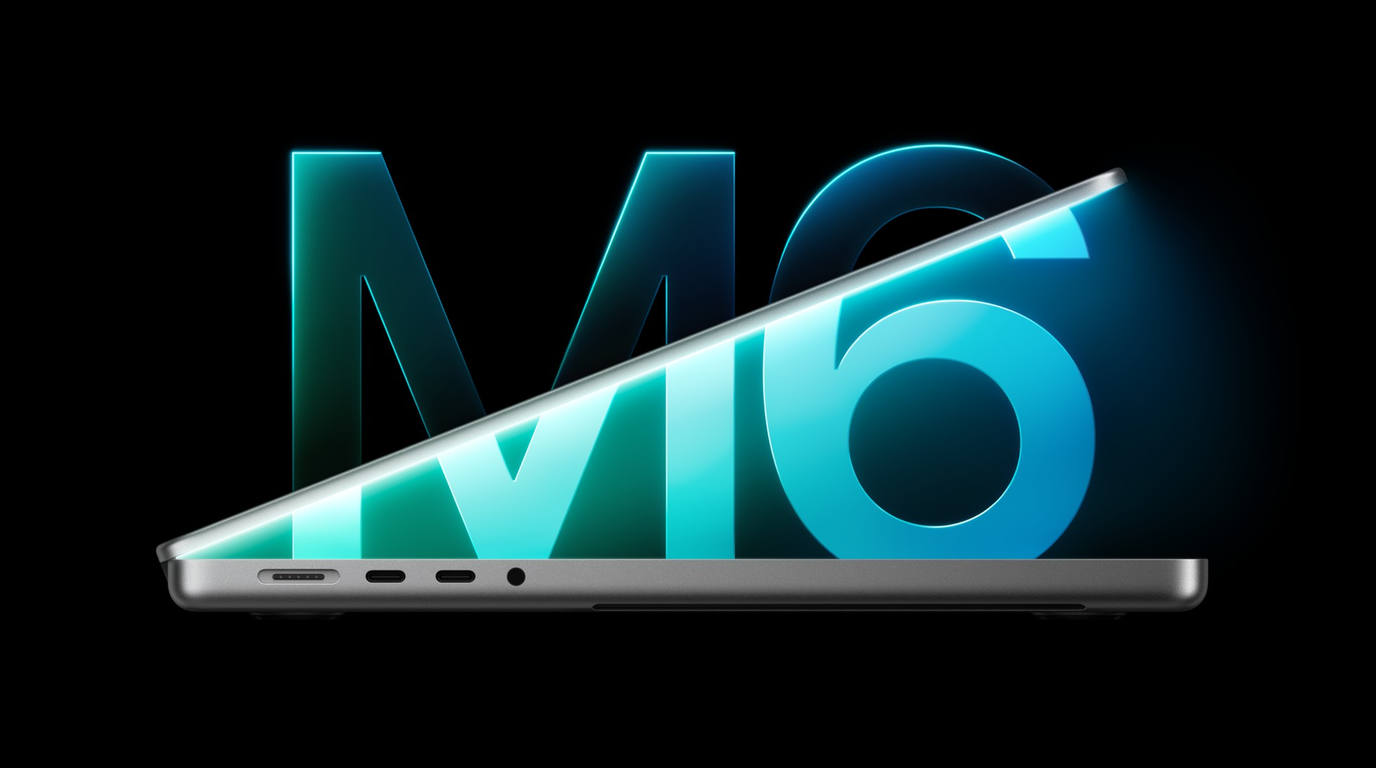
Apple's M6 MacBook Pro Starts at $1,999 With Up to 30% Faster Graphics Than M5
Apple's $1,999 14-inch M6 MacBook Pro has a 12-core CPU and a 12-core GPU, with preorders October 28 and store availability November 6.
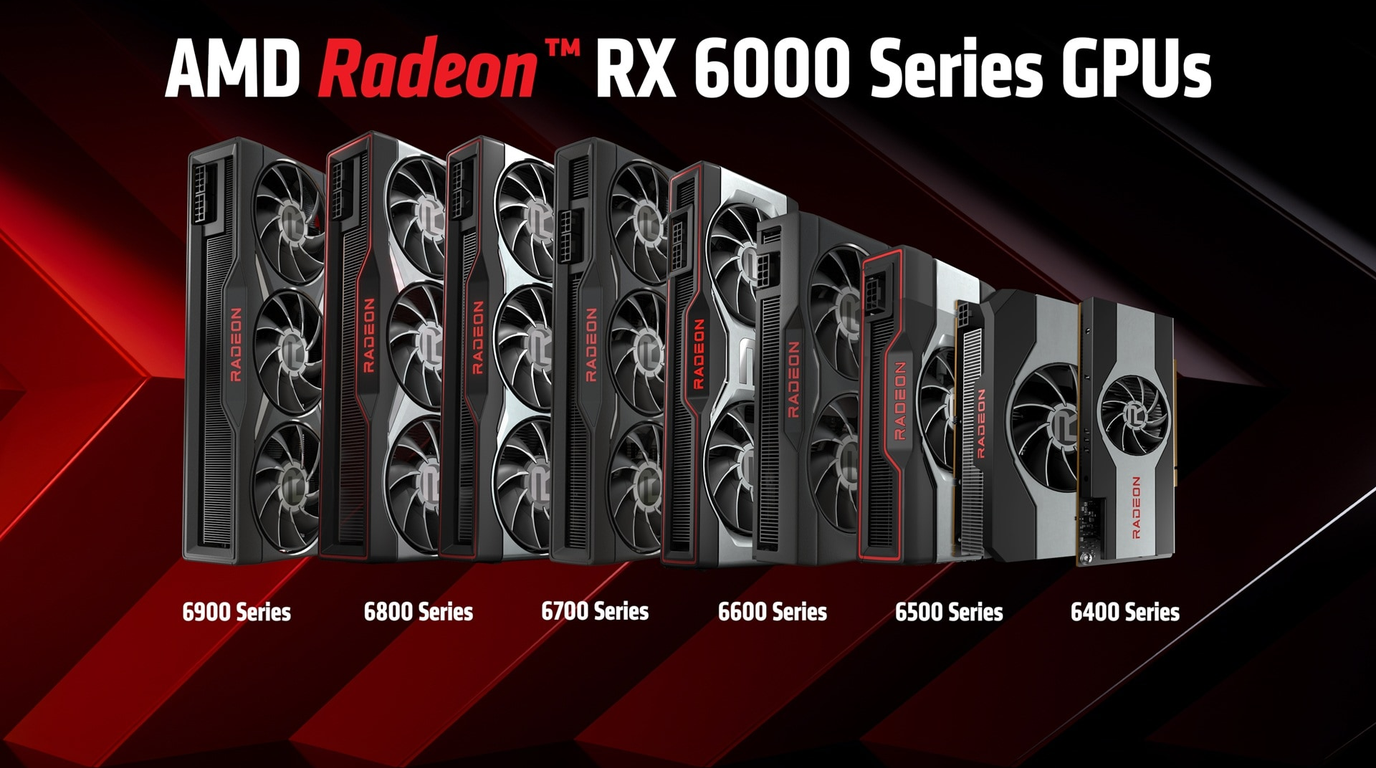
AMD Brings FSR 4.1 to Radeon RX 6000 Cards Months Ahead of Schedule
AMD's Adrenalin 26.10.1 adds FSR 4.1 upscaling to Radeon RX 6000 desktop GPUs and select Ryzen systems, while handheld updates depend on manufacturers and Xbox support is coming soon.

Your Work Email Could Save You 10% or More: What Corporate Employee Discounts in India Really Are
Corporate employee stores sound like they are for companies buying in bulk. They aren't. They are personal purchases at a discount, unlocked with your work email. Here is what they are, how much I saved, and why it pays to talk to the sales team too.