
Dodo Duckie: The Indian Studio That Took Jumping Out of a 3D Platformer
BornMonkie is a seven person team in Hyderabad who spent six years on a puzzle platformer about a duck. Then they removed the one verb every 3D platformer is built on. It launched on July 23 and sits at 98% positive on Steam as of 2 August.
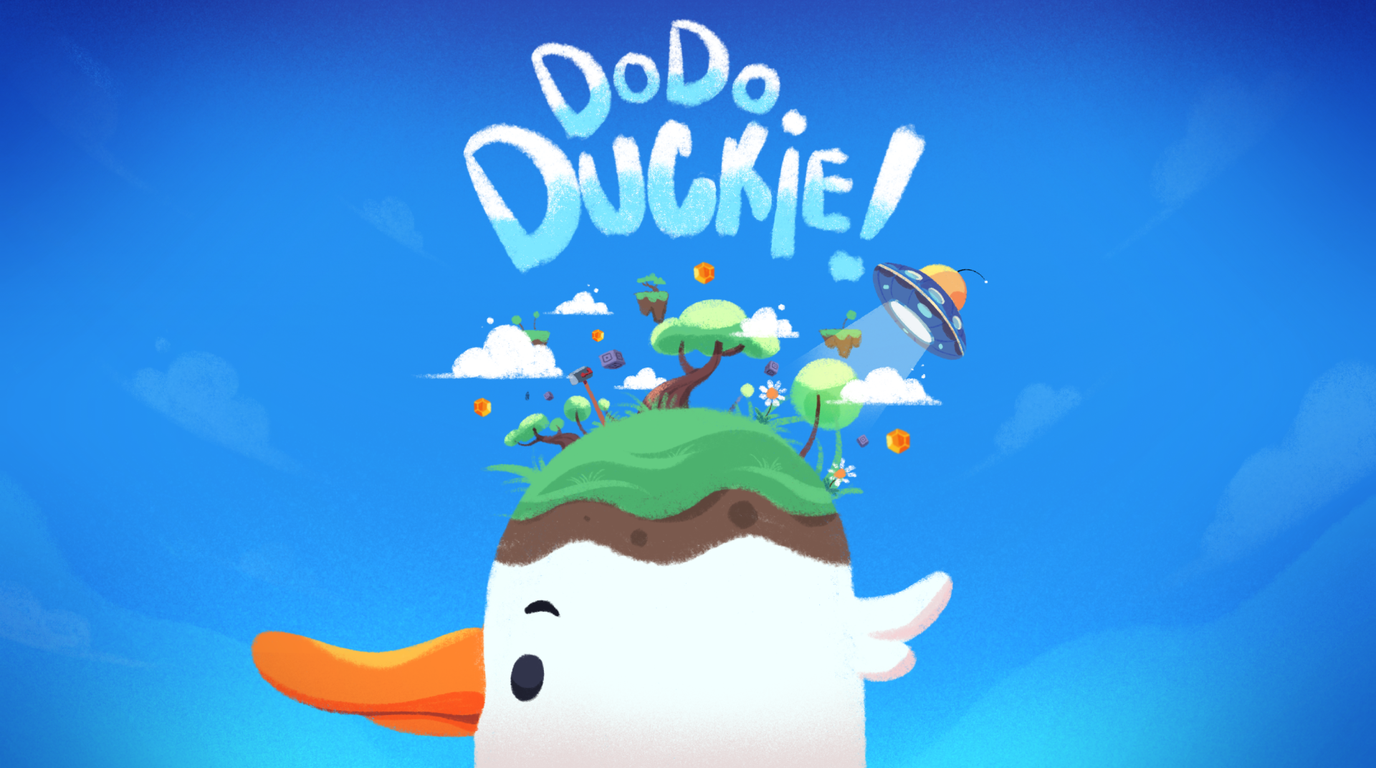
Every 3D platformer is built on one verb. You jump. Mario jumps, Crash jumps, Astro jumps. The genre is named after the thing you jump on.
So when the seven person studio in Hyderabad behind it decided their 3D platformer would have no jump button at all, that was not a shortcut. That was the whole design.
Dodo Duckie is the first PC and console game from BornMonkie, a bootstrapped team led by founder and creative director V K Samhith, with his sister Samveda producing and Vincent Boichut on art direction. It launched on July 23 on Steam, the Epic Games Store and Xbox Series X|S, and it is sitting at Very Positive, 98% of 67 Steam reviews as of 2 August. I want to talk about how it got made, because the decisions behind it are more interesting than the average indie launch story.
The premise
You play Dodo, a duckling raised among chickens by a grandma on a farm. A UFO turns up, abducts every chicken, and Dodo follows it through a portal into a glitched dimension to get them back.
The hook is a magical cap that flips the world between 2D and 3D on demand. A wall in three dimensions becomes a floor in two. A gap you cannot cross flattens into a path. The puzzles live in the gap between those two readings of the same space.
That mechanic is the part that gets written up. The no-jump decision is the part that makes it work.
Removing the verb
I have played the opening of the demo, and I will be honest about my first reaction: I spent a few minutes annoyed. The game is clearly well made, the movement is clean, the sound is doing real work, and the world reads instantly. And then you are standing in 3D in front of something you obviously want to hop over, and there is no jump button. It feels broken before it feels clever.
It is not broken. It is the entire point, and once I found the developers explaining it, the design snapped into focus.
Here is Samhith in the Xbox Wire piece:
Early on, we made a radical design decision: remove the jump mechanic entirely from a 3D space.
And here he is in an interview with Video Chums, explaining why:
if switching between 2D and 3D didn't fundamentally change what you could do, it was just a visual gimmick
That is the whole argument in one line. If you could do everything in 3D, you would never flip. Players would treat 3D as the "real" game, use the flat view as a camera trick, and the mechanic the studio spent six years on would be decoration. The team saw that happen in early prototypes.
So the fix was not to make 2D more appealing. It was to make each view genuinely incomplete. 2D is where you jump. 3D is where you attack. Neither mode is the full game, so you are constantly flipping not for the spectacle of it but because the tool you need is on the other side.
He puts the result this way, again to Video Chums:
2D and 3D aren't just different camera angles, they're different tools, and the puzzles are built around knowing when to use which one
Once you know that, the missing jump stops reading as an omission and starts reading as a trade. You did not lose a verb. You got a different one, and the puzzle is working out which of the two rooms in front of you is the one you should be standing in.
It is worth sitting with how disciplined that is. In a normal 3D platformer, jumping is the escape hatch for both the player and the designer. Stuck on a ledge? Jump. Need tension in a corridor? Add a gap. It is the universal solvent of the genre and it papers over a lot of weak spatial design. Removing it means every obstacle has to be solved by changing how you look at the room rather than how you move through it.
This is also the kind of decision a large studio almost never makes, for structural rather than creative reasons. A big-budget platformer has to be legible in a thirty second trailer, and "you cannot jump" is a hard thing to take into a marketing meeting. Deleting a core verb is a small-team luxury.
The constraint that became the art style
The mechanic created a problem the team did not anticipate, and this is my favourite part of the story.
They spent two to three months on visual prototypes that were not working. Art Director Vincent Boichut identified why: the game needed a single set of assets that read correctly in both 2D and 3D. Not two art passes. One.
That is a brutal restriction. An object that looks right in a three-quarter 3D view often collapses into visual mush when flattened, and a shape designed to read cleanly in silhouette can look plain and untextured in 3D. Every prop had to survive both.
Samhith's framing is that the constraint "became our superpower". It pushed them toward clean shapes and vibrant flat colour, because that is the vocabulary that survives the flip. The look people are now calling charming is not decoration applied at the end. It is the direct output of a technical requirement.
That is a pattern worth naming, because it shows up constantly in good small-team work and almost never in big-budget work. When you cannot afford two solutions, you find the one that does both jobs, and the result usually has more personality than either would have had alone.
What testing told them
There is a humbling detail in Samhith's account. When playtesters got hold of it, the perspective-switching feature was not the main draw. Dodo's personality landed first. The puzzles were the reason they kept going.
The mechanic that took six years to build was not what people fell for. The duck was.
I think most developers would quietly file that away and keep leading with the mechanic anyway. Publishing it is a good sign about how this team thinks.
Six years, part time
The first prototype dates to 2019. It was not fully realised until 2025, worked on in gaps between service work and other projects that actually paid.
That timeline is the real story of most indie games and it is the part that gets flattened into a launch-day headline. Six years of intermittent progress on a game about a duck, while doing client work to stay solvent, is a very different kind of achievement from a funded studio shipping in eighteen months.
Two more details worth noting. The team states plainly that no generative AI was used in making it. And the story is told visually, with Samhith aiming for emotional beats that "feel like a Pixar short, landing purely through what you see, making Dodo's story universal no matter what language you speak". The game ships in eleven languages, but the storytelling is designed not to depend on any of them.
Where to get it
As of 2 August, Dodo Duckie is on Steam at ₹280, down 20% from ₹350. That introductory price is listed as ending on 6 August, so there are a few days left as this goes up. Store pricing and offers change, so treat those figures as a snapshot rather than a promise.
It is also on the Epic Games Store and on Xbox Series X|S with Xbox Play Anywhere, so one Xbox purchase covers console and PC. There is full controller support.
One thing worth knowing if you play on Steam Deck: it is not Verified yet, and the developers have flagged that some players hit a launch failure on the default Proton version. Their workaround is to open the game's properties and set the compatibility tool to Proton Experimental or Proton 9. They say they are fixing it and going for Verified status.
PlayStation and Nintendo Switch versions are on the way. There is already a PS5 store page up, and the Switch version is expected later in 2026. Worth knowing that the Switch release is a Switch 1 build which runs on Switch 2 through backwards compatibility rather than a native Switch 2 version, after the studio corrected an earlier announcement that suggested otherwise.
Start with the free demo. It is the same core perspective-switching loop, and it is enough to tell you within ten minutes whether this clicks for you.
Why I am writing this one up
We spend a lot of time here on the big end of gaming. Preorder windows, price rises, platform strategy, which console is unbundling what this quarter. That coverage is fine, but it is not where the interesting decisions are being made.
The interesting decisions are being made by seven people in Hyderabad who spent six years on a game about a duck and then deleted the jump button.
Sources & References
- Xbox Wire: Find out How an Adorable Duck Drove us to Get Creative with Dodo Duckie (Accessed on August 2, 2026)
- Video Chums: Let's Quack about Dodo Duckie, an interview with V K Samhith (Accessed on August 2, 2026)
- BornMonkie: Dodo Duckie Press Kit (Accessed on August 2, 2026)
- r/IndianGaming: We are a small 7 person Indie team from Hyderabad and we just launched our first PC & Console game (Accessed on August 2, 2026)
- Steam: Dodo Duckie store page, for pricing and review data (Accessed on August 2, 2026)
- Nintendo Everything: Dodo Duckie announced for Nintendo Switch 2 and Switch [update: only Switch 1] (Accessed on August 2, 2026)
- BornMonkie on Steam: Steam Deck Compatibility Info, 24 July 2026 (Accessed on August 2, 2026)
A note on this post: I have played about fifteen minutes of the demo, so this is a piece about the design thinking behind Dodo Duckie rather than a review of it. My impressions are limited to that, and everything about the studio and its development comes from the developers' published interviews, the store listing and public review data rather than from me. I am buying the full version, and I will follow up with proper impressions once I have played enough to have them.
Let's Talk Gizmo is starting to cover indie games we think deserve more attention. We are not paid for these, we have no contact with the developers, and there are no affiliate links. We only write up games we can recommend, so treat our silence about a game as nothing more than silence.
More from the desk
GTA VI Consoles Target 30 FPS at Launch as 60 FPS Hopes Fade
Following the 26-minute Extended Look reveal and developer comments, technical analyses indicate Grand Theft Auto VI is targeting 30 FPS on PS5 and Xbox Series X|S.
Microsoft Moves to Bring Legacy Xbox 360 Library to PC and Handheld Devices
Microsoft is expanding its game preservation strategy by preparing Xbox 360 titles for PC and handhelds, building on its recent original Xbox PC backward compatibility rollout.
Samsung Showcases Odyssey G8 6K Gaming Monitor at Gamescom 2026
Samsung headlines Gamescom 2026 with the Odyssey G8 (G80HS), showcasing the industry's first 6K gaming monitor alongside the PCIe 5.0 SSD 9100 PRO.