
NVIDIA RTX Spark: The AI 'Superchip' Platform Set to Redefine the Windows PC
Unveiled at GTC Taipei, NVIDIA's RTX Spark is a groundbreaking 1-petaflop superchip platform in partnership with MediaTek and Microsoft, designed to run local AI agents and challenge the x86 PC duopoly.
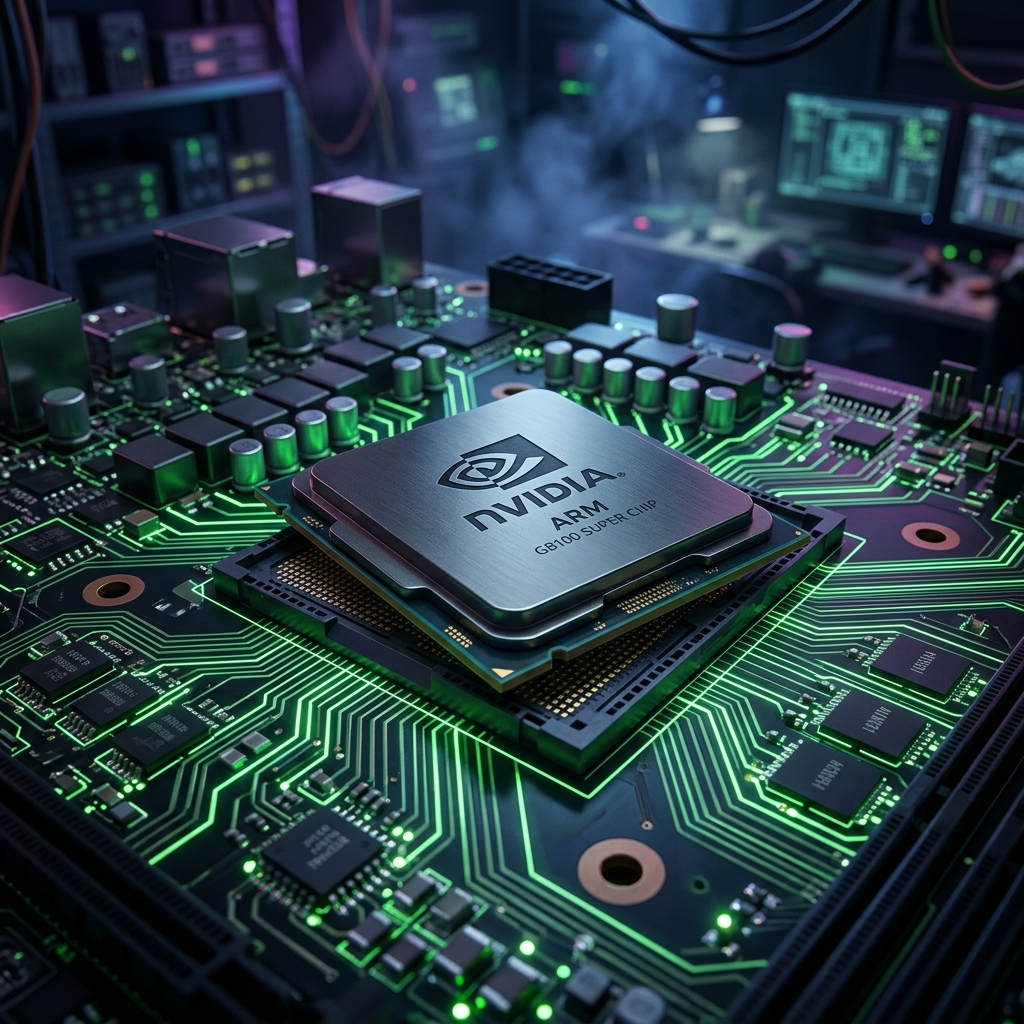
For decades, the personal computer has been a tool—a passive device that waits for your input. Click. Type. Launch. But with a landmark keynote delivered in Taipei on June 1, 2026 (May 31 in the US), NVIDIA officially declared the end of the passive PC era.
The multi-trillion-dollar AI titan has unveiled NVIDIA RTX Spark, a high-performance consumer "superchip" platform designed to fundamentally reinvent Windows PCs for the era of personal AI agents, shifting the PC from a simple tool to an active "teammate."
Built in close collaboration with mobile silicon giant MediaTek and deeply integrated with Microsoft Windows, RTX Spark is a direct challenge to the decades-long x86 CPU duopoly of Intel and AMD. By fusing server-class ARM processing with Blackwell graphics and dedicated AI hardware on a single die, NVIDIA is making a massive bid to capture the future of personal computing.
1. Under the Hood: The 1-Petaflop Superchip
RTX Spark is not just a standard CPU or APU. It is a "superchip" platform that borrows its architectural philosophy from NVIDIA’s enterprise data centers, scaling it down for consumer form factors.
Reportedly built on TSMC's 3nm process, the chip’s hardware specifications are jaw-dropping:
- The Grace CPU: A custom 20-core ARM-based processor, co-designed with MediaTek. This combines MediaTek's mobile power efficiency and connectivity expertise with NVIDIA's high-throughput architecture.
- The Blackwell GPU: Fuses an integrated GPU featuring 6,144 CUDA cores, next-generation RT cores for ray tracing, and 5th-generation Tensor Cores with FP4 precision.
- High-Speed Interconnect: The Grace CPU and Blackwell GPU are linked on-die via NVIDIA's proprietary high-speed NVLink-C2C interconnect (reportedly delivering 600 GB/s of bidirectional bandwidth, roughly 5x the speed of PCIe Gen 5), bypassing traditional PCIe bus bottlenecks.
- Unified Memory: Supports up to 128GB of ultra-fast unified memory, reportedly utilizing coherent LPDDR5X memory with around 300 GB/s of bandwidth.
- AI Compute Power: Delivers up to 1 petaflop of local AI performance (FP4), completely blowing past the constraints of typical 40-50 TOPS NPUs.
Jensen Huang, founder and CEO of NVIDIA, summarized the transition: “For forty years, you launched apps. Click. Type. With RTX Spark and Microsoft Windows, you ask — and the PC does the work. RTX Spark brings everything NVIDIA has built — CUDA, RTX, our AI platform — into a single superchip.”
2. Leaked SKUs and Expected Pricing
While NVIDIA and Microsoft kept pricing under wraps during the announcement, industry leaks and analyst reports from Morgan Stanley have painted a clear picture of the product lineup. The RTX Spark platform is expected to launch with a two-SKU split:
- RTX Spark N1X (The Flagship): Featuring the full 128GB of unified LPDDR5X memory and the complete Blackwell GPU core count. Premium laptops featuring this chip (like the XPS 16 Creator Edition) are rumored to start around $2,899.
- RTX Spark N1 (The Performance Tier): A slightly scaled-down model featuring up to 64GB of unified memory. Laptops utilizing the N1 variant are expected to target a more accessible starting point of $1,799.
3. The AI Agent Revolution: From Tools to Teammates
While gamers will be excited by the graphics pipeline, NVIDIA's primary pitch for RTX Spark is the enablement of autonomous local AI agents.
With open-source agent frameworks like OpenClaw and Nous Research's Hermes Agent exploding in popularity, the industry has reached an inflection point. However, running these agents in the cloud compromises privacy and incurs massive latency. RTX Spark solves this by running them entirely on-device.
To support this transition, NVIDIA and Microsoft are delivering a robust, secure software ecosystem:
- NVIDIA OpenShell: A new runtime and security management layer that allows users to securely define agent access, route queries to local models based on privacy policies, and mask personal data before queries hit cloud models.
- Windows Security Primitives: Deep kernel-level integration offering secure identity, containment, and policy enforcement specifically for agentic workflows.
- Microsoft eXecution Containers (MXC): Sandboxed execution environments that isolate local AI agents, allowing them to access local files and apps securely without risking core system integrity. (Note: These containment layers and the developer SDKs were fully detailed at Microsoft Build, which ran June 2–3).
- Taskbar Integration: Microsoft is building Windows-native agent capabilities directly accessible to users via the Windows taskbar UI.
Microsoft's Satya Nadella highlighted the ambition behind the partnership: “Our goal is to deliver unmetered intelligence to every home and every desk with Windows. RTX Spark marks a real breakthrough towards that vision.”
4. The Performance: Full-Stack RTX Creative & Gaming
The combination of the Blackwell architecture and up to 128GB of unified memory unlocks professional creative and gaming capabilities previously confined to workstation towers:
- Workstations on the Go: Creators can render massive 90GB 3D scenes with OptiX and DLSS, edit 12K 4:2:2 video using the dedicated Blackwell decoder, and run 120-billion-parameter LLMs with up to a 1-million-token context window locally.
- New Neural Visuals: RTX Spark will power new RTX capabilities, including DLSS 4.5 Ray Reconstruction featuring a second-generation transformer model (coming to Blender 5.3) and RTX Video with 4x Frame Generation (coming to ComfyUI).
- AAA Gaming: The platform runs modern AAA titles at 1440p resolution and over 100 FPS with full ray tracing, DLSS, and Reflex. The platform has received active support from developers like KRAFTON, Remedy Entertainment, NetEase (NARAKA: BLADEPOINT), Riot Games, and Xbox.
5. The Creative Rearchitecture: Adobe Partnership
A key pillar of the launch is NVIDIA’s partnership with Adobe to rearchitect Adobe Premiere Pro and Photoshop from the ground up for RTX Spark.
Adobe chair and CEO Shantanu Narayen explained the joint effort: “Together, we are building AI-native creative experiences for RTX Spark that deliver the performance, intelligence and responsiveness people need to create at the pace of their ambition.”
What this looks like in practice:
- Unified Video Pipeline: Adobe Premiere Pro features a rewritten video engine that leverages RTX Spark's unified memory and Blackwell GPU, delivering up to 2x faster AI performance for Firefly-powered Generative Extend, real-time color correction, and timeline rendering.
- AI-Native Photoshop: Generative Fill and other neural filters will run locally, accelerated by NVIDIA TensorRT. The next-generation Photoshop engine is optimized for GPU-accelerated compositing and high dynamic range brushes.
- 3D Texturing: Adobe Substance 3D Painter and Stager will run natively on the architecture for smoother, more responsive 3D scene composition.
6. The Competitive Fallout: Intel and AMD on Alert
RTX Spark represents a worst-case scenario for Intel and AMD. The traditional x86 architecture has long defended itself through its legacy software monopoly. However, as Microsoft pivots to ARM and NVIDIA brings its graphics hegemony to the CPU space, that defense is crumbling.
- Intel’s Foundry Battle: Intel is in the middle of a massive turnaround effort. RTX Spark threatens their premium laptop footprint just as their Lunar and Panther Lake architectures try to hold the line.
- AMD’s Pivot: While AMD remains a dominant force in gaming handhelds (powering devices like the Steam Deck, ASUS ROG Ally, and Lenovo Legion Go), they are increasingly forced to choose between consumer volume and high-margin AI enterprise chips. NVIDIA’s alliance with MediaTek hits AMD in their premium laptop sweet spot, while NVIDIA already has Nintendo's custom Switch 2 silicon locked down.
As we covered in The Global Memory Shortage, the semiconductor market is already under severe memory constraints. By utilizing custom unified packaging, NVIDIA is securing its own ecosystem, leaving traditional component manufacturers to adapt to a much more consolidated landscape.
7. Premium Designs: Fall 2026 Launch
RTX Spark laptops are engineered to be as slim as 14 millimeters and as light as 3 pounds, utilizing precision-machined aluminum chassis. They will feature color-accurate tandem OLED displays running NVIDIA G-SYNC technology.
Major hardware makers are already preparing launch models for Fall 2026:
- Dell: The XPS 16 Creator Edition will leverage the chip's massive unified memory to offer a portable studio for heavy creative work.
- HP: Upcoming HP OmniBook models will be among the thinnest RTX Spark laptops, built specifically for agentic developers.
- Lenovo: Partnering with NVIDIA to deliver a new level of AI experiences across its device portfolio.
- Microsoft Surface: The Surface Laptop Ultra will bring serious performance to developers and engineers who want native, on-device Windows agents.
- ASUS & MSI: Preparing ultra-slim gaming and productivity laptops that redefine efficiency.
- Acer & GIGABYTE: Expected to follow shortly with their own designs.
Final Thoughts: A New Era of Personal Computing
The personal computer is undergoing its most radical transformation since the transition from command-line interfaces to graphical user interfaces.
With RTX Spark, NVIDIA isn’t just selling a faster processor. They are attempting to control the entire hardware and software stack of the next generation of computing—combining an ARM CPU, a Blackwell GPU, local AI runtimes, and Windows security containers into a single cohesive platform.
If they succeed, the decades-long reign of x86 is about to face its most spark-filled challenge yet.
What are your thoughts on NVIDIA RTX Spark? Would you buy an ARM-based Windows PC powered by an NVIDIA-MediaTek superchip, or do you plan to stick with traditional Intel/AMD x86 processors for your desktop and gaming rigs? Let us know your thoughts in the comments below!
More from the desk
Samsung Showcases Odyssey G8 6K Gaming Monitor at Gamescom 2026
Samsung headlines Gamescom 2026 with the Odyssey G8 (G80HS), showcasing the industry's first 6K gaming monitor alongside the PCIe 5.0 SSD 9100 PRO.
Galaxy Unpacked July 2026: Z Fold8 Ultra, Watch Ultra 2, and Intelligent Eyewear Unveiled
Samsung's July 2026 Unpacked event delivered a massive ecosystem expansion, introducing the Galaxy Z Fold8 Ultra, the Snapdragon-powered Watch Ultra 2, and Android XR intelligent eyewear.
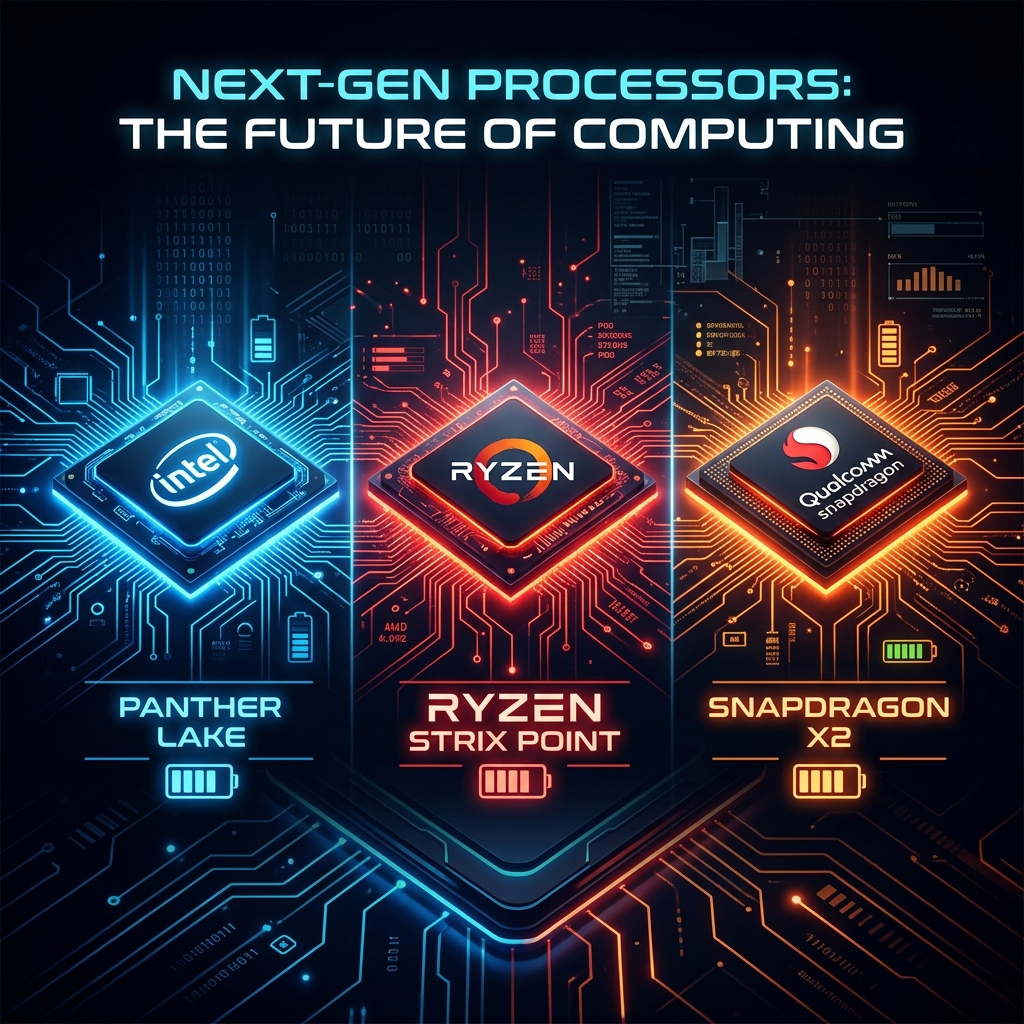
Intel Panther Lake vs. Ryzen Gorgon Point vs. Snapdragon X2: The 2026 Battery War
The old assumptions about ARM and x86 battery life are breaking down. Armed with real-world review data, we look at how Intel's Panther Lake has closed the gap, and why Qualcomm's sophomore Snapdragon X2 traded some of its efficiency crown for performance.