
Microsoft Moves to Bring Legacy Xbox 360 Library to PC and Handheld Devices
Microsoft is expanding its game preservation strategy by preparing Xbox 360 titles for PC and handhelds, building on its recent original Xbox PC backward compatibility rollout.
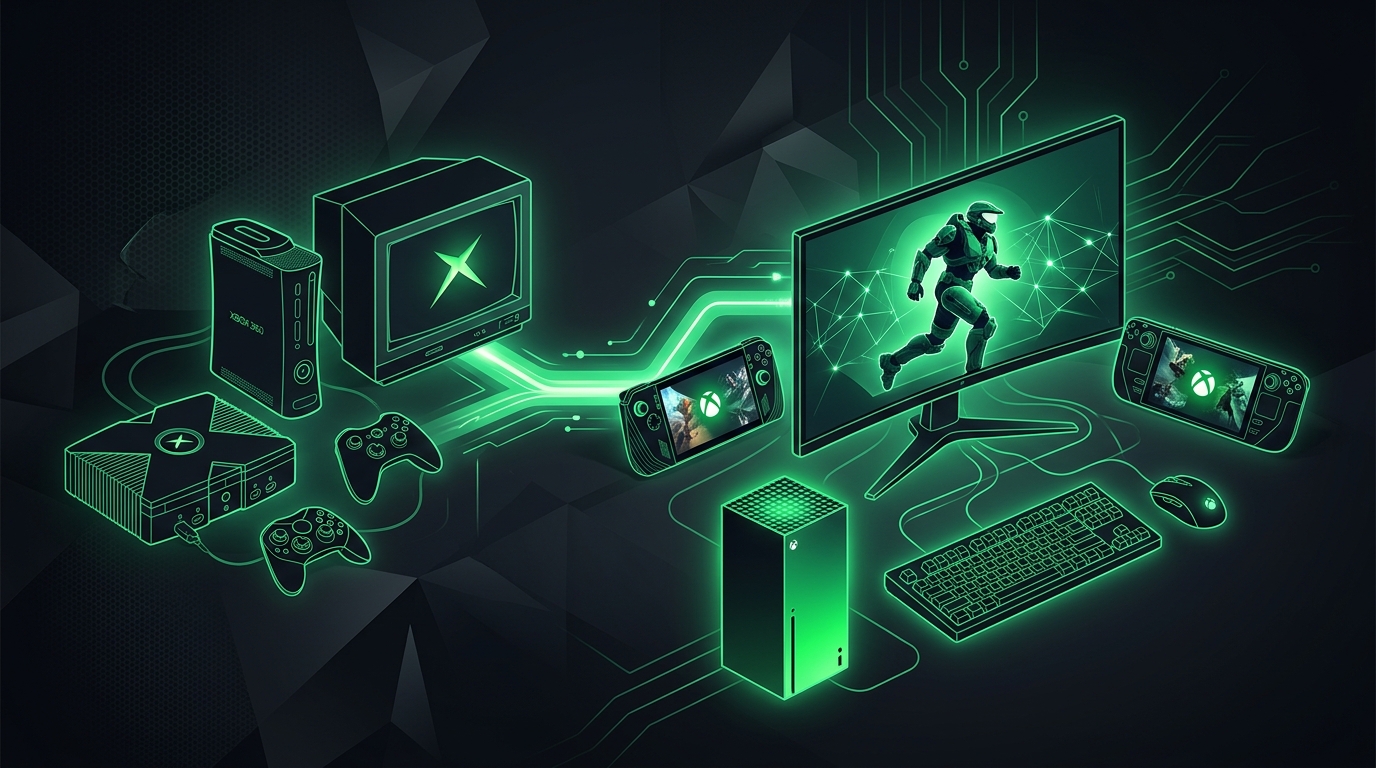
Following the July 2026 launch of official original Xbox backward compatibility on Windows 11, an internal developer document obtained by The Verge reveals that Microsoft is actively working to bring the Xbox 360 library to Windows PCs, handheld devices, and future Xbox hardware.
For years, playing seventh-generation console classics on PC meant relying either on official modern remasters or community-developed software like Xenia. Microsoft’s platform strategy aims to integrate legacy titles directly into the Xbox on PC app, pairing cross-entitlement with emulator-driven resolution upscaling.
🕹️ Phase 1: Original Xbox Titles Arrive on PC
The foundation for this initiative debuted on July 22, 2026, when Microsoft launched Xbox Backward Compatibility on PC in early release for Windows 11 in supported regions. The program launched with four original Xbox titles: BLiNX: The Time Sweeper, Conker: Live and Reloaded, Crimson Skies: High Road to Revenge, and Fuzion Frenzy. According to the leaked internal roadmap, Microsoft targets an expanded October 2026 launch for the original Xbox PC catalog, though Microsoft has not officially announced a date.
The launch established three key feature standards for legacy games on Windows:
- Cross-License Entitlement: Digital console licenses automatically carry over, granting PC access to existing digital owners without additional cost.
- Game Pass Integration: All four launch titles are included across all Xbox Game Pass plans.
- Enhanced Visual Options: Rendering settings include up to 4x resolution upscaling, VSync support, anisotropic filtering, enhanced anti-aliasing, and Fullscreen or Windowed display modes.
The XeO3 Datamine
Shortly after launch, technical analysis by security researchers and dataminers examining the early release runtime binaries revealed an unexpected architecture. Reported by Tom's Hardware, Kotaku, PC Gamer, and WCCFTech, the package contains XeO3 (also referenced as Fission), Microsoft's existing Xbox 360 emulation stack from Xbox One and Series consoles, repackaged as a desktop app. Hosted inside XeO3 is XeFu, Microsoft’s original Xbox-on-360 translation layer.
By bringing its existing console emulation stack to Windows 11, Microsoft appears to have established the technical groundwork to execute Xbox 360 binaries directly on PC. Microsoft has not officially commented on the datamined XeO3 runtime.
🎮 The Xbox 360 Roadmap and Handheld Focus
The Verge’s leak report by Jay Peters and Tom Warren, alongside reporting from PC Gamer, TechSpot, and Video Games Chronicle, indicates that Microsoft aims to roll out Xbox 360 backward compatibility between 2027 and 2028.
The planned expansion targets Windows 11 PCs, Xbox-branded handheld devices like the ROG Xbox Ally and ROG Xbox Ally X, and Microsoft's next-generation console codenamed Project Helix (first announced by Microsoft Gaming CEO Asha Sharma on March 5, 2026).
The Developer Opt-In Model
Unlike the universal catalog additions of earlier console generations, the Xbox 360 PC expansion operates on an opt-in basis for developers. Under the leaked guidelines, participating developers retain control over setting their game's retail price and deciding whether the title appears on Xbox Game Pass.
This approach addresses the legal and licensing hurdles that previously halted console backward compatibility additions. When Microsoft paused catalog additions in June 2019, official statements cited a reallocation of engineering resources toward Project Scarlett. Later, when concluding the final console catalog expansion in November 2021, Xbox Compatibility Program Lead Peggy Lo explained that Microsoft had "reached the limit of our ability to bring new games to the catalog from the past due to licensing, legal and technical constraints." Giving developers direct control over pricing and Game Pass inclusion bypasses key commercial obstacles to bringing legacy games to PC.
📊 Backward Compatibility Program Overview
| Feature / Metric | Original Xbox (Early Release, July 2026) | Xbox 360 (Reported Target 2027-2028) |
|---|---|---|
| Supported Operating System | Windows 11 (Supported Regions Only) | To Be Announced |
| Target Hardware | Windows 11 PCs, ROG Xbox Ally / Ally X | Windows 11 PCs, Handhelds, Project Helix |
| Catalog Rollout Schedule | Early Release (Leaked Target: Oct 2026) | Phased Developer Opt-In (2027-2028) |
| Visual Enhancements | Up to 4x Upscaling, VSync, Anti-Aliasing | To Be Announced |
| Digital License Transfer | Verified (Console Digital Purchases Carry Over) | To Be Announced |
| Game Pass Status | Included in All Xbox Game Pass Plans | Developer Choice (Opt-In) |
| Achievements Support | Promised Later This Year (Console & PC) | To Be Announced |
| Developer Controls | First-Party Platform Program | Retail Pricing & Game Pass Inclusion |
🏛️ Game Preservation & Ecosystem Expansion
Extending the Xbox 360 library to Windows 11 PCs and handhelds represents a significant shift in game preservation. Rather than leaving classic games locked to aging 2000s console hardware, official PC emulation treats the Xbox 360 catalog as a permanent, playable software archive.
Beyond the emulation roadmap, the leaked developer document outlines plans for a separate Disc-to-Digital license verification system. Designed for physical Xbox One and Xbox Series game discs (which reportedly may not extend to Xbox 360 discs), the system allows players using compatible Xbox consoles to validate physical media for digital play. Crucially, the digital entitlement remains tied to the physical disc, meaning if the disc is sold or transferred, the digital license moves with it. Though originally planned for an Xbox Insider test in July followed by an August rollout, reports indicate the beta has slipped past its initial test window.
For handheld gamers using devices like the ROG Xbox Ally, official platform support aims to provide better stability and battery efficiency compared to unofficial custom emulation setups. As handheld PCs continue to gain market share, Microsoft’s deep catalog of Xbox 360 blockbusters serves as a key differentiator for the Windows gaming ecosystem.
🔗 Sources & References
- Xbox Wire: Play More of the Games You Love, Wherever You Play with XBOX Backward Compatibility on PC (Published July 22, 2026)
- The Verge: Jay Peters and Tom Warren, Microsoft is bringing Xbox 360 games to PC (Published August 3, 2026)
- Tom's Hardware: Hassam Nasir, Microsoft shipped a native Xbox 360 emulator with its new backwards-compatible releases on PC — modders quickly got 360 games running with minor tweaks (Published July 25, 2026)
- PC Gamer (Datamine): Ted Litchfield, The new 'backward compatible' Xbox games on PC run on an OG Xbox emulator inside an Xbox 360 emulator, and people have already used it to run other Xbox 360 games (Published July 26, 2026)
- PC Gamer (Roadmap): Lincoln Carpenter, Microsoft is planning to bring Xbox 360 games to PC, according to leaked documents (Published August 3, 2026)
- TechSpot: Xbox 360 games could soon be playable on PCs, handhelds, and next-gen Xbox consoles (Published August 4, 2026)
- Video Games Chronicle: Xbox backward compatibility on PC and Helix will reportedly include Xbox 360 games (Published August 4, 2026)
- WCCFTech: Xbox Backward Compatibility Comes to PC and Handhelds at Last, Reviving Conker and BLiNX With 4x Upscaling (Published July 22, 2026)
- Kotaku: Dataminers Discover Xbox Backward Compatibility On PC Can Run Xbox 360 Games (Published July 24, 2026)
- Xbox Wire (2019): E3 2019: What’s Next for Xbox Backward Compatibility (Published June 10, 2019)
- Xbox Wire (2021): Celebrate 20 years of Xbox with over 70 new Backward Compatible Games (Published November 15, 2021)
- Xbox Wire (Project Helix): From GDC: Building the Next Generation of Xbox (Published March 11, 2026)
- Official Xbox Store: XBOX Backward Compatible Games | XBOX (Accessed August 2026)
More from the desk
GTA VI Consoles Target 30 FPS at Launch as 60 FPS Hopes Fade
Following the 26-minute Extended Look reveal and developer comments, technical analyses indicate Grand Theft Auto VI is targeting 30 FPS on PS5 and Xbox Series X|S.

The Death of Disc: Sony to End PlayStation Physical Game Production in 2028
Sony has officially announced it will discontinue physical disc production for all new PlayStation games starting January 2028. Coupled with the newly announced shutdown of the PS3 and Vita digital storefronts, the era of physical console gaming is officially drawing to a close.

GTA VI Pre-Orders Officially Live: Standard vs. Ultimate Edition, India Pricing, and Bonuses Revealed
Grand Theft Auto VI pre-orders are officially live worldwide. We compare the Standard and Ultimate Editions, break down the Vintage Vice City Pack pre-order bonus, and analyse regional pricing for India, the US, UK, and Europe.