
The Golden Era of Smartphones is Dead: How We Lost Real Hardware Choice
We once lived in a vibrant mobile landscape defined by Symbian, BlackBerry, Windows Phone, and webOS. Today, we are left with a duopoly of uniform glass slabs.
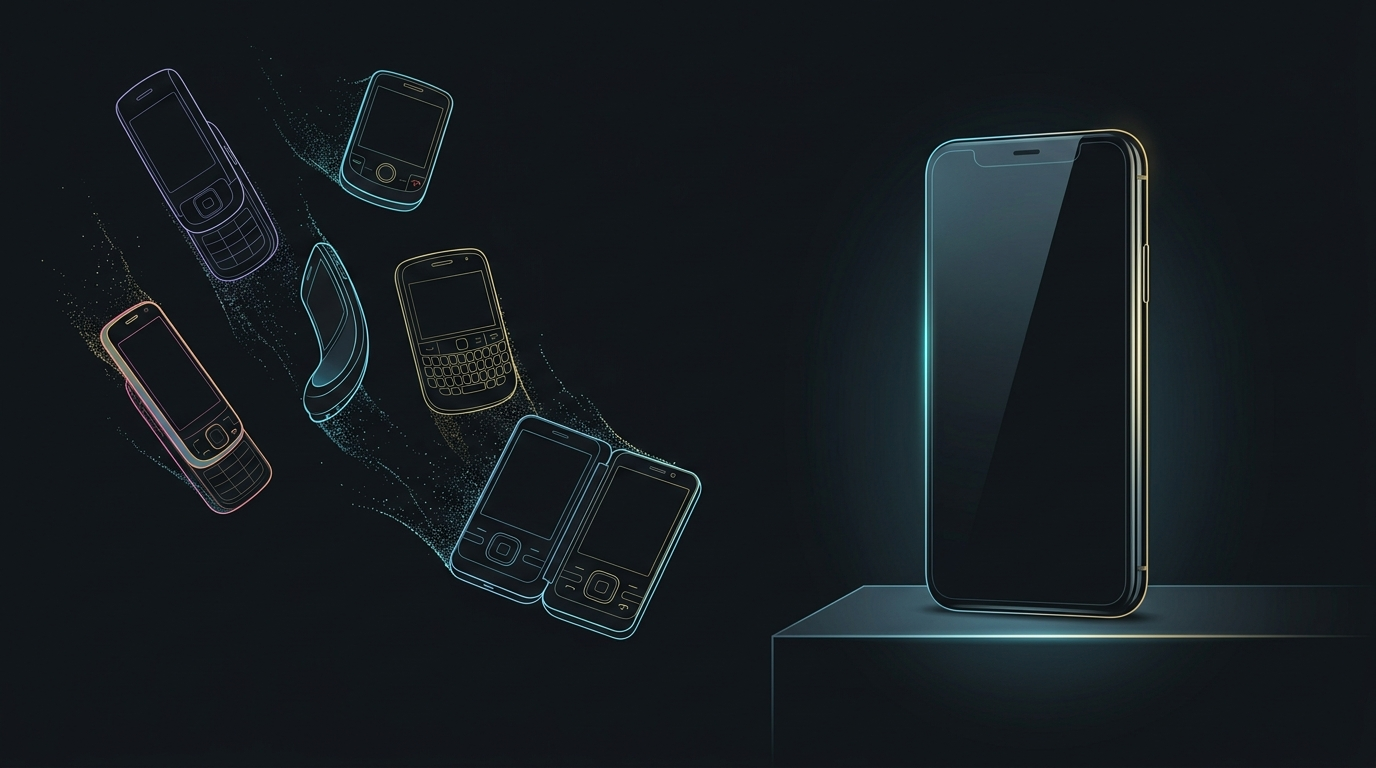
Look at the premium smartphone landscape today, and you are met with a sea of beautiful, hyper-polished, yet ultimately identical glass slabs. Whether you choose an iPhone, a Samsung Galaxy, a Google Pixel, or a flagship from a major Chinese brand, you are buying into the exact same hardware template. It will feature a slightly faster processor, a screen that is marginally brighter than last year's model, and a suite of software-locked artificial intelligence features designed to justify the upgrade.
The hardware itself has stagnated. Titanium rails, slightly repositioned camera lenses, and minor charging speed bumps dominate the spec sheets. The market has consolidated, and in the process, the sense of wonder and genuine choice has disappeared. The golden era of mobile phones, defined by diverse operating systems, bold engineering gambles, and wild design philosophies, has vanished.
A Vibrant, Fragmented Ecosystem
There was a time when choosing a mobile phone was not just a question of brand loyalty: it was a choice of lifestyle, operating system, and input method. In the 2000s and early 2010s, manufacturers did not just iterate on a standard blueprint. They actively experimented, resulting in a chaotic and wonderful sandbox of competing designs.
Symbian and Nokia: The Multimedia Juggernauts
Before the iPhone redefined the industry, Nokia and its Symbian operating system ruled the world. Nokia did not view the phone as a static rectangular slab. They built the Nokia N95, which featured a dual-slider mechanism: slide it up for a physical numeric keypad, or slide it down to reveal dedicated media playback controls.
They designed the Nokia N93, a phone that swiveled into a hand-held camcorder with a 3x optical zoom lens. They even targeted gamers with the Nokia N-Gage, merging a portable console controller with a mobile phone. Symbian was a fully-fledged multitasking platform that proved smartphones could be powerful media hubs long before touchscreens took over.
BlackBerry: The Productivity Tool of Choice
For business professionals and teenagers alike, Research In Motion (RIM) offered a distinct alternative: the BlackBerry. Built around a physical QWERTY keyboard, secure push email, and the instant-messaging network BlackBerry Messenger (BBM), BlackBerry devices like the Bold and the Curve offered a highly tactile, productivity-first experience. You chose a BlackBerry because you wanted to type at blistering speeds, navigate with a physical trackball or trackpad, and manage emails with unmatched security. It was a dedicated communication tool, not a generic media screen.
Windows Phone: Design Fluidity and Camera Extremes
Even after iOS and Android established their dominance, Microsoft and Nokia attempted a bold counter-offensive. Windows Phone and its Metro UI (featuring dynamic, colorful Live Tiles) was a breath of fresh air. It was fluid, clean, and visually distinct from the grid-of-icons layouts of its competitors.
This era culminated in hardware like the Nokia Lumia 1020. Wrapped in a striking matte yellow polycarbonate unibody, it featured a massive 41-megapixel camera sensor with optical image stabilization and a physical camera grip accessory. It was a professional camera first, and a phone second.
webOS: The Multitasking Pioneer
Palm's webOS, debuting on the Palm Pre in 2009, was a tragic masterpiece. Long before Apple or Google adopted gesture navigation and card-based multitasking, webOS had perfected them. The Pre featured a compact, rounded design with a keyboard that slid out vertically from the bottom. It also brought wireless charging to the mainstream smartphone via the magnetic Touchstone dock. Although webOS struggled commercially, its software design ideas were so forward-thinking that they prefigured modern iOS and Android navigation today.
Android's Experimental Sandbox
As Symbian, BlackBerry, and Windows Phone began to recede, Android inherited that spirit of hardware variety. In the early 2010s, Android was a playground where developers actively tried to stand out from the crowd.
HTC: The Industrial Pioneers
HTC was the original trailblazer of Android. They built the HTC Dream (the T-Mobile G1), which introduced the world to Android with a physical slide-out keyboard and a physical trackball. HTC did not stop at utility; they pushed industrial design to its limits. The HTC One M7, launched in 2013, was a masterpiece of aluminum unibody construction, proving that Android phones could feel just as premium as the iPhone. From the front-facing stereo BoomSound speakers to the bold dual-camera setup on the One M8, HTC proved that hardware could be both beautiful and functional.
LG: The Mad Scientists
If HTC was the refined designer, LG was the mad scientist. LG seemed completely unconcerned with market conformity, releasing devices that were daring and occasionally bizarre. They moved the power and volume buttons to the back of the phone with the LG G2, a choice that made large screens surprisingly ergonomic. They gave us the LG G Flex, featuring a curved screen and a self-healing plastic back that could erase minor scratches.
LG also championed audio fidelity, incorporating a high-end Quad DAC into the LG V20, alongside a unique secondary "ticker" display for shortcuts on both the V10 and V20. Even as the market consolidated, LG took one final, glorious gamble with the LG Wing: a phone with a swiveling display that revealed a second screen underneath.
Sony: The Premium Specialists
Sony carved out a niche as the master of sleek, utilitarian industrial design. The Xperia Z series popularized water and dust resistance years before it became a standard flagship feature. Sony understood that not everyone wanted a giant screen, creating the Xperia Compact line to offer flagship chipsets in small bodies, utilizing slightly lower-resolution screens and less memory to maintain performance. They even catered to gamers with the Xperia Play, a slide-out gaming phone featuring a dedicated gamepad.
Motorola: Customization and Modularity
Before it was acquired, Motorola focused on making the smartphone personal. The first-generation Moto X, assembled in Texas, was customized by the buyer using the Moto Maker platform. You could choose wood veneers (such as genuine bamboo), leather, or colored plastic backs, engraving, and custom accent colors. Beyond aesthetics, Motorola pioneered software-hardware integration with active displays and hands-free, always-on voice activation. Later, they attempted modularity with Moto Mods, magnetic backplates that used custom connectors to transform your phone into a projector, a Hasselblad camera, or a heavy-duty speaker.
The Road to Consolidation
This era of rich mobile diversity did not end overnight; it was slowly dismantled by market economics, developer network effects, and corporate consolidations.
First came the fall of Windows Phone. Despite Nokia's beautiful Lumia hardware, the platform struggled to attract third-party developers, creating an insurmountable "app gap." Microsoft completed its acquisition of Nokia's Devices and Services business in April 2014. The announced headline price was EUR 5.44 billion (about $7.2 billion), though Microsoft's FY2014 annual report records total consideration of $9.5 billion, a figure that adds $1.5 billion of acquired cash plus $800 million in currency, working capital, and other adjustments. Microsoft subsequently wrote off the asset and exited the mobile hardware business.
Next, BlackBerry was forced to pivot. Unable to compete with the vast app ecosystems of iOS and Android, BlackBerry officially announced the end of all internal hardware development in September 2016, transitioning into a software and security-focused enterprise.
In the Android space, the sandbox began to shrink. Google agreed to acquire Motorola Mobility in August 2011 to secure its patent portfolio, closing the deal in May 2012 for $12.5 billion. Google subsequently sold the hardware division to Lenovo in October 2014 for $2.91 billion. Under Lenovo, the brand shifted focus from premium customization to standard midrange devices and conventional foldables.
In January 2018, Google completed a $1.1 billion agreement with HTC, acquiring the engineering talent that helped develop the Pixel along with a non-exclusive license for HTC's patents. While this did not immediately end HTC's phone line, and the brand shipped its U12+ flagship later that year, it marked the beginning of its retreat to a minor regional player.
The final blow came in April 2021, when LG Electronics announced the closure of its mobile phone business, completing the wind-down by July 31, 2021. This decision followed 23 consecutive quarters of financial losses in the mobile division, totaling roughly KRW 5 trillion (about $4.5 billion), prompting LG to redirect its resources to electric vehicle components and robotics.
The Modern Monolith
Today, we live in a duopoly. Outside of China, consumers choose between iOS and Android, and the physical form factor has converged. Even the foldables market, which briefly promised a return to the experimental era, has settled largely into standard book-style folds and clamshell flips. While shipping tri-fold devices like the Huawei Mate XT or Samsung's short-lived Galaxy Z TriFold (which launched in the US on January 30, 2026 for $2,899, sold out on Samsung's online store within 5 minutes of availability, and was subsequently discontinued in March 2026 with final US stock selling out in mid-April) show that physical experimentation has not completely ceased, they remain expensive, transient experiments rather than mass-market options.
We lost real choice because maintaining independent operating systems and wild hardware designs is incredibly expensive. In a mature market, R&D costs are high, and margins are thin. A single failed hardware gamble can sink an entire division. At the same time, the rising costs of memory components have forced manufacturers to prioritize supply chain optimization and spec management over costly hardware experimentation. TrendForce reports DRAM contract prices spiking through the first half of 2026.
We now carry pocket computers that are more powerful, durable, and reliable than anything from the golden era. Our photos are sharper, our batteries last longer, and our screens are brighter. Yet, we have lost the excitement of the unknown. The golden era of smartphone choice did not just vanish: it was optimized out of existence.
Sources & References
- LG Electronics: LG to Exit Mobile Phone Business (Published April 5, 2021; Accessed August 4, 2026)
- LG Electronics: LG Announces Second-Quarter 2021 Financial Results (Published July 29, 2021; Accessed August 4, 2026)
- Google: Welcoming new teammates from HTC to our hardware organization (Published January 30, 2018; Accessed August 4, 2026)
- Lenovo: Lenovo Completes Acquisition of Motorola Mobility from Google (Published October 30, 2014; Accessed August 4, 2026)
- Microsoft: FY2014 Annual Report (Published October 9, 2014; Accessed August 4, 2026)
- BlackBerry: BlackBerry Reports Q2 Fiscal 2017 Results (Published September 28, 2016; Accessed August 4, 2026)
- Google: Google Acquires Motorola Mobility (Published May 22, 2012; Accessed August 4, 2026)
- TrendForce: LG Set to Exit from Smartphone Business Following Years of Losses (Published April 28, 2021; Accessed August 4, 2026)
- TrendForce: Memory Price Outlook for 1Q26 Sharply Upgraded; QoQ Increases of All Product Categories to Hit Record Highs (Published February 2, 2026; Accessed August 4, 2026)
- TrendForce: Memory Price Surge to Persist in 1Q26; Smartphone and Notebook Brands Begin Raising Prices and Downgrading Specs (Published December 11, 2025; Accessed August 4, 2026)
- 9to5Google: Galaxy Z TriFold lands in the US for $2,899, available January 30 (Published January 27, 2026; Accessed August 4, 2026)
- 9to5Google: Samsung says Galaxy Z TriFold's limited run is now completely sold out (Published April 17, 2026; Accessed August 4, 2026)
- SamMobile: Samsung confirms the Galaxy Z TriFold is being discontinued (Published March 17, 2026; Accessed August 4, 2026)
- SamMobile: It took just 5 minutes for the $2,899 Galaxy Z TriFold to sell out in the US (Published February 10, 2026; Accessed August 4, 2026)
More from the desk
The Xbox Unbundling: Fourteen Days to Pull the Trigger on Series X and S
With Series X and S prices rising on August 1st and Game Pass Ultimate pivoting to a catalogue product, Microsoft's gaming economics are undergoing a massive shift. We examine the maths before the deadline, including why India's numbers look nothing like America's.
The Subscription Tax: Why Hardware Makers Are Locking Basic Features Behind Paywalls
From heated seats and smart home cameras to wearable fitness sensors: why hardware manufacturers are turning one-time physical purchases into recurring monthly fees, and why consumers are reaching a breaking point.
Google's Indian Anniversary Sale is a Farce: A Celebration or an Inventory Clearance?
From out-of-stock base models and highly restricted sale colors to Google's persistent omission of LTE watch variants in India: this Anniversary Sale highlights a frustrating pattern of secondary treatment. Here is our raw take on why Indian consumers deserve better.